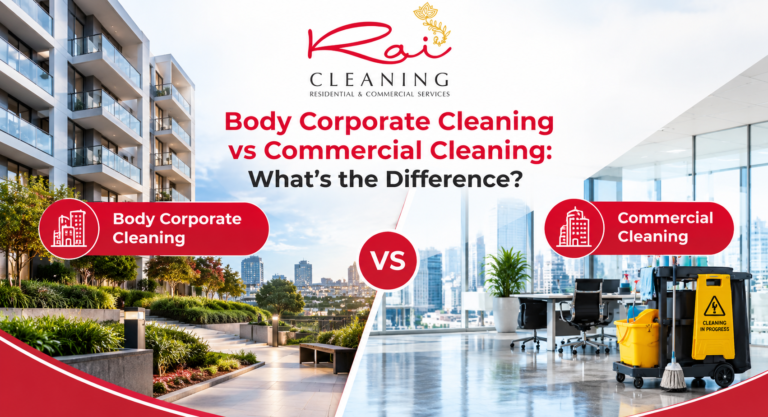
At first glance, body corporate cleaning and commercial cleaning can look almost identical. Both may involve vacuuming, mopping, dusting, sanitising, and maintaining a property to a professional standard. But the cleaning requirements are very different once you look at who uses the property & how frequently those areas are used.
A busy office mainly requires cleaning of workstations, meeting rooms, and reception areas. An apartment complex or owners’ corporation property may require something much broader. In Victoria, the terminology has also changed. Consumer Affairs Victoria explains that an owners corporation was formerly called a body corporate. In this context, owner corporations can manage common property across residential, commercial, retail, industrial, and mixed-use developments.
Body Corporate Cleaning vs Commercial Cleaning can vary based on property size, traffic levels, cleaning frequency, and service requirements. In this article, we’ll explore the key differences between body corporate cleaning and commercial cleaning. We’ll look at when you may need dedicated body corporate cleaning and what common areas and shared facilities are typically included.
Quick Answer: Body Corporate vs Commercial Cleaning
Body corporate cleaning is focused on maintaining shared or common areas of a multi-unit or owners’ corporation property. Commercial cleaning generally focuses on workplaces and business premises.
A body corporate cleaning program may cover shared entrances, foyers, corridors, staircases, communal facilities, and external areas. Commercial cleaning may focus on offices, retail stores, warehouses, medical facilities, workplaces, kitchens, bathrooms, and other business-specific areas.
There can be significant overlap between the two. In fact, a professional cleaning company may use many of the same machines, products, and cleaning methods for both. The difference is usually the property environment, cleaning scope, frequency, access requirements, and maintenance priorities.
Body Corporate Cleaning vs Commercial Cleaning: Comparison Table
This comparison table highlights the key differences between body corporate and commercial cleaning, including property types, cleaning areas, service frequency, specialized requirements, and pricing factors. It helps property managers and business owners quickly understand which cleaning approach best suits their property and ongoing maintenance needs.
| Factor | Body Corporate Cleaning | Regular Commercial Cleaning |
|---|---|---|
| Main environment | Apartments, units, strata, and mixed-use developments | Offices, shops, warehouses, and workplaces |
| Primary focus | Shared/common areas | Business/work areas |
| Typical users | Residents, visitors, tenants, and guests | Employees, customers, and visitors |
| Foyers | Frequently included | Sometimes included |
| Corridors | Frequently included | Depends on property |
| Lift cleaning | Common requirement | Less common |
| Stairwell cleaning | Common requirement | Property-dependent |
| Car park cleaning | Often required | Usually specialized |
| Bin area cleaning | Often important | Depends on business |
| Office cleaning | May be included in mixed-use sites | Core service |
| Retail cleaning | Sometimes part of mixed-use property | Core service |
| Cleaning frequency | Often scheduled around resident traffic | Based on business operations |
| Pressure cleaning | Frequently useful for external common areas | Usually occasional/specialized |
| Communication | Often involves managers, committees, or owner corporation representatives | Usually a business owner, manager, or facility manager |
| Inspection | Commonly important for ongoing property presentation | Important for service quality |
| Scope | Property-wide common areas | Business-specific areas |
What Is Body Corporate Cleaning?
Body corporate cleaning generally refers to cleaning services designed for shared areas and facilities within an owners corporation, strata, or multi-unit property. In Victoria, the official terminology is now generally “owners corporation,” although “body corporate” remains a widely used search term and industry phrase.
Consumer Affairs Victoria states that owners’ corporations manage common property within developments such as flats, apartments, and units. That means the cleaner isn’t simply maintaining one person’s apartment. The job often involves maintaining areas that multiple residents, tenants, and visitors use.
Consumer Affairs Victoria also identifies cleaning gutters and changing light bulbs as examples of corrective maintenance for owners’ corporation common property. It is about maintaining shared property to an acceptable standard over time. This may include:
- Building entrances
- Foyers
- Reception areas
- Corridors
- Hallways
- Staircases
- Lift interiors
- Lift doors
- Shared bathrooms
- Common kitchens
- Shared lounges
- Recreation areas
- Bin rooms
Learn more about what’s included in body corporate cleaning Melbourne, and get clear expected results for your requirements.
What Is Regular Commercial Cleaning?
Regular commercial cleaning is the routine cleaning and maintenance carried out in business premises to keep workplaces clean and presentable. Unlike one-off deep cleaning, it focuses on consistent upkeep through scheduled cleaning tasks based on the property’s needs, usage, and operating hours.
Typical services include vacuuming and mopping floors, dusting surfaces, and cleaning kitchens and staff areas. This also includes sanitising bathrooms, emptying bins, and maintaining common areas. Depending on the property, regular commercial cleaning may also include carpet maintenance, washroom servicing, and periodic detailed cleaning.
The main purpose is to prevent dirt, dust, stains, odors, and germs from building up over time. A consistent cleaning schedule can also create a more professional environment for employees, customers, visitors, and clients. Regular commercial cleaning is commonly used in offices, retail stores, medical facilities, schools, warehouses, childcare centers, and other commercial spaces.
Frequency can range from daily cleaning to several visits per week or customized schedules based on occupancy and cleaning needs. In simple terms, regular commercial cleaning keeps a business property consistently clean rather than waiting until it needs a major deep clean. Depending on the property, it can include:
- Office cleaning
- Retail cleaning
- Warehouse cleaning
- Factory cleaning
- Medical cleaning
- School cleaning
- Childcare cleaning
- Restaurant cleaning
- Gym cleaning
- Cinema cleaning
- Showroom cleaning
- Reception cleaning
- Workplace bathroom cleaning
- Kitchen cleaning
It works well only if you know how to choose the best commercial cleaning company to help you maintain everything you need. Top-rated commercial cleaners will prepare your properties like new and maintain them for a long time.
The Biggest Difference: Who Uses the Space?
This is one of the simplest ways to understand the difference. An office might have employees arriving during business hours. An apartment complex may have residents coming and going throughout the day and night. Choosing between body corporate cleaning vs. commercial cleaning starts with identifying whether the property is residential or commercial.
A retail property has customers. A mixed-use building may have residents, offices, retailers, visitors, and delivery personnel sharing the same property. For example, imagine an apartment building with:
- 80 apartments
- 2 lifts
- 5 floors
- underground parking
- a shared entrance
- corridors
- rubbish rooms
- visitor access
- common outdoor areas
The individual apartments might be separately maintained by residents or tenants. But the shared areas still require ongoing cleaning and presentation. This is where a dedicated body corporate cleaning program becomes useful.
When Do You Need Body Corporate Cleaning?
Body corporate cleaning helps maintain shared residential and commercial spaces where multiple people use the same facilities every day. Regular cleaning is important for keeping common areas hygienic, presentable, and safe for residents, tenants, visitors, and property managers. A consistent cleaning schedule can also help prevent dirt, stains, rubbish, and unpleasant odours from building up.
When Common Areas Get Dirty
High-traffic areas can become dirty quickly, especially in apartment buildings, townhouses, and managed properties. Entrances, hallways, lifts, staircases, corridors, and shared spaces often require regular attention. Body corporate cleaners help keep these areas looking clean and well maintained.
After High Foot Traffic
Busy properties experience more dust, marks, spills, and general wear. If residents, visitors, contractors, or delivery workers regularly move through shared areas, cleaning may be required more frequently. Scheduled cleaning helps maintain a consistent standard throughout the property.
When Washrooms Need Attention
Shared bathrooms and facilities require regular cleaning and sanitization. Toilets, sinks, mirrors, floors, touchpoints, and other frequently used surfaces can quickly accumulate dirt and bacteria. Routine servicing helps maintain a more hygienic environment.
For Apartment Buildings
Apartment complexes often have multiple shared spaces that need ongoing maintenance. Lobby areas, lifts, stairwells, corridors, car parks, bin areas, and communal rooms can all benefit from professional body corporate cleaning.
Before Property Inspections
A clean property creates a better impression during inspections, maintenance visits, meetings, and property assessments. Professional cleaning can help ensure common areas are presentable before owners, residents, prospective buyers, contractors, or management teams visit.
After Events or Gatherings
Shared facilities may require additional cleaning after meetings, community events, celebrations, or other gatherings. Floors, tables, bathrooms, rubbish areas, and frequently touched surfaces may need attention after increased use.
When Rubbish Builds Up
Bin rooms and waste collection areas can develop unpleasant smells, spills, and residue when they are not maintained regularly. Cleaning these areas helps improve hygiene and keeps shared waste facilities more manageable.
During Seasonal Changes
Weather conditions can increase cleaning requirements. Rain can bring mud and moisture into entrances, while dry conditions may increase dust around common areas. Seasonal cleaning schedules can help properties respond to these changing conditions.
For Regular Maintenance
Body corporate cleaning should not only happen when a property looks dirty. Scheduled maintenance is often the most effective approach. Depending on the building and level of use, cleaning may be required daily, several times per week, weekly, or according to a customised maintenance plan.
When Professional Cleaning Is Needed
Professional body corporate cleaners can manage routine cleaning across shared areas while following the property’s specific requirements. Services may include vacuuming, mopping, dusting, surface cleaning, washroom sanitization, rubbish-area cleaning, glass cleaning, and periodic pressure washing.
Keep Shared Areas Presentable
A clean common area contributes to a more comfortable environment for everyone using the property. Whether you manage an apartment complex, townhouse development, strata property, or other shared facility, a structured cleaning plan can help maintain hygiene, appearance, and cleanliness throughout the property.
If common areas are becoming difficult to maintain, body corporate cleaning can provide a practical solution with scheduled services tailored to the property’s needs.
How Often Should Body Corporate Areas Be Cleaned?
Body corporate areas need regular cleaning to remain clean, hygienic, safe, and welcoming for residents, visitors, and property managers. The right cleaning frequency depends on the size of the property, number of residents, foot traffic, facilities, and how quickly dirt and waste build up.
There is no single schedule that suits every body corporate property. A customized cleaning plan can ensure common areas receive the right level of attention without unnecessary cleaning costs. Understanding body corporate cleaning vs. commercial cleaning makes it easier to choose a suitable cleaning plan and budget.
Daily Cleaning
High-traffic areas often benefit from daily cleaning. Entryways, lifts, foyers, hallways, shared bathrooms, and frequently used common areas can quickly collect dust, dirt, marks, and debris.
Daily tasks may include vacuuming, mopping, wiping surfaces, removing rubbish, cleaning glass entry doors, and sanitising frequently touched surfaces such as lift buttons and door handles.
Weekly Cleaning
Weekly cleaning is suitable for areas with moderate traffic or where daily servicing is not necessary. This may include detailed dusting, floor maintenance, window cleaning, skirting-board cleaning, and additional attention to shared facilities.
Regular weekly cleaning also helps prevent small cleaning issues from becoming larger maintenance problems.
Periodic Deep Cleaning
Some body corporate areas require deeper cleaning at scheduled intervals. Depending on property conditions, this may be performed monthly, quarterly, or as required.
Periodic services can include pressure washing, carpet cleaning, window cleaning, high-level dusting, stain removal, and detailed cleaning of difficult-to-reach areas.
High-Traffic Areas
High-traffic spaces generally require more frequent cleaning than less-used areas. Building entrances, foyers, lifts, staircases, mail areas, and shared recreational facilities can accumulate dirt much faster.
Increasing cleaning frequency in these locations can help maintain a consistently presentable appearance throughout the property.
Outdoor Areas
Outdoor common areas should also be included in the cleaning schedule. Paths, driveways, bin areas, entrances, balconies, and shared outdoor spaces can collect leaves, dirt, grime, and other debris.
Pressure washing may be useful for removing built-up dirt, stains, algae, and grime from suitable hard surfaces.
Seasonal Changes
Cleaning requirements can change throughout the year. Wet weather can bring additional mud and moisture into entrances, while warmer periods may increase dust, outdoor debris, and general usage of shared facilities.
A flexible cleaning schedule allows body corporate properties to respond to these changing conditions.
Resident Numbers
The number of residents and visitors can significantly affect cleaning frequency. A large apartment complex with heavy daily movement may require more frequent cleaning than a smaller development with fewer occupants.
Property managers and body corporate committees should consider occupancy levels when establishing a cleaning routine.
Professional Inspections
Regular inspections can help identify areas that require additional attention. Cleaning teams can assess floors, walls, windows, common areas, rubbish zones, and high-touch surfaces to determine whether the existing schedule is working effectively.
Quality inspections can also help maintain consistent cleaning standards across the property.
A Flexible Cleaning Plan
The best approach is usually a tailored cleaning schedule rather than a fixed routine for every property. Some body corporate buildings may need daily servicing, while others may only require several visits each week combined with periodic deep cleaning.
A professional commercial cleaning team can assess the property and recommend a practical schedule based on traffic, facilities, cleanliness standards, and budget.
Keep Common Areas Presentable
Consistent body corporate cleaning helps maintain attractive shared spaces, supports better hygiene, and creates a positive experience for residents and visitors. With the right combination of routine cleaning, periodic deep cleaning, and targeted maintenance, body corporate properties can stay cleaner and easier to manage throughout the year.
Checklist Comparison: Body Corporate Cleaning vs Commercial Cleaning
Body corporate and commercial cleaning both help maintain clean, hygienic, and presentable properties. However, the cleaning requirements can differ depending on how the property is used. Body corporate cleaning mainly focuses on shared residential areas, while commercial cleaning is designed for workplaces and business premises.
| Cleaning Area | Body Corporate | Commercial |
|---|---|---|
| Foyers & Entrances | ✓ | ✓ |
| Lifts | ✓ | Sometimes |
| Hallways | ✓ | ✓ |
| Staircases | ✓ | ✓ |
| Offices | Sometimes | ✓ |
| Shared Facilities | ✓ | Sometimes |
| Bathrooms | ✓ | ✓ |
| Bin Areas | ✓ | ✓ |
| Floor Cleaning | ✓ | ✓ |
| Glass Cleaning | ✓ | ✓ |
| Pressure Washing | ✓ | ✓ |
| High-Touch Areas | ✓ | ✓ |
| Outdoor Areas | ✓ | Sometimes |
| Carpet Cleaning | ✓ | ✓ |
| Regular Inspections | ✓ | ✓ |
| Custom Cleaning Schedule | ✓ | ✓ |
For a more detailed checklist, see our Body Corporate Cleaning Checklist. Strata cleaning focuses on maintaining shared areas in apartment buildings and residential complexes. Commercial cleaning focuses on offices, retail spaces, warehouses, schools, and other business premises. Both can include regular cleaning, periodic deep cleaning, floor care, and specialized services based on the property’s needs.
Cost Comparison: Body Corporate vs Commercial Cleaning
We offer both body corporate and commercial cleaning from $45 per hour. The hourly rate provides a simple starting point, while the final price depends on the cleaning requirements of each property.
| Pricing Factor | How It Can Affect Cost |
|---|---|
| Property Size | Larger areas may require more cleaning hours. |
| Cleaning Frequency | Daily or frequent visits can change the total cost. |
| Traffic Levels | High-traffic areas may need additional cleaning. |
| Service Scope | More cleaning tasks can increase required hours. |
| Deep Cleaning | Detailed cleaning may require extra time. |
| Floor Types | Different surfaces may need different methods. |
| Glass Cleaning | Larger or difficult-to-access windows can add time |
| Pressure Washing | Outdoor areas may require specialized equipment. |
| Facilities | More shared facilities can increase cleaning time. |
| Waste Areas | Larger bin rooms or waste areas may need extra attention. |
| Special Requirements | Additional cleaning requests can affect the estimate. |
| Access Conditions | Difficult access or restricted hours may affect labor time. |
Whether you need body corporate cleaning or commercial cleaning, our services start from $45 per hour. Your actual cleaning cost is based on the work required rather than simply the property type. Every property is different. Request a custom quote, and we can assess your cleaning requirements, recommended service frequency, and estimated cleaning hours to provide a more suitable price for your property.
Body Corporate Cleaning Melbourne: What Property Managers Should Look For
For property managers and owners of corporations searching for body corporate cleaning in Melbourne, the most important factor isn’t simply finding a company that uses the words “strata cleaning.”
Look for evidence that the provider understands:
- Common property
- High-traffic areas
- Resident access
- Shared facilities
- Cleaning frequencies
- Periodic maintenance
- Safety procedures
- Quality control
- Communication
- Specialist cleaning requirements
A provider offering both body corporate cleaning and commercial cleaning can also be useful for mixed-use developments where the property has residential and commercial components.
Body Corporate Cleaning vs Commercial Cleaning: Which One Do You Need?
Choosing the right cleaning service depends mainly on the type of property, how it is used, and which areas need regular maintenance.
Choose Body Corporate Cleaning
Body corporate cleaning is the better choice if you manage or maintain an apartment building, strata property, residential complex, or shared community. It focuses on common areas used by multiple residents and visitors.
You may need body corporate cleaning for:
- Building entrances and foyers
- Lifts and lift lobbies
- Hallways and staircases
- Shared bathrooms and facilities
- Bin and waste areas
- Driveways and pathways
- Gyms, lounges, and recreation areas
- Outdoor common spaces
The goal is to keep shared areas clean, hygienic, and presentable for residents and visitors.
Choose Commercial Cleaning
Commercial cleaning is more suitable for offices, retail stores, warehouses, schools, medical facilities, childcare centers, and other business premises.
You may need commercial cleaning for:
- Workspaces and offices
- Reception areas
- Staff rooms and kitchens
- Customer areas
- Commercial bathrooms
- Retail floors
- Warehouses and storage areas
- High-touch workplace surfaces
It helps businesses maintain a professional, hygienic, and welcoming environment.
Which Should You Choose?
If your property is primarily residential with shared facilities, choose body corporate cleaning. If it is a business or workplace, commercial cleaning is generally the better fit. Both services can be customized around your property’s size, traffic, cleaning frequency, and specific requirements, with services available from $45 per hour.
Not sure which service you need? Request a custom quote and discuss your property’s cleaning requirements with the RaiCleaning team.
Final Verdict: Body Corporate Cleaning or Commercial Cleaning?
The difference isn’t simply residential versus commercial. It’s about how the property operates.
A body corporate property is a shared environment. Its cleaning requirements are shaped by residents, visitors, common property, building access, shared facilities, and ongoing presentation. Commercial cleaning is generally shaped by the needs of a business, its employees, customers, equipment, workplace, and operating hours.
There is overlap between the two, but the cleaning plan should never be one-size-fits-all. If you manage an apartment complex, strata property, mixed-use development, or owners corporation, start by identifying every shared area that needs regular attention.
For Melbourne property managers, owners, corporations, and building representatives, a properly structured body corporate cleaning program can provide a much more practical solution than simply applying a standard office-cleaning checklist to a residential or mixed-use building.