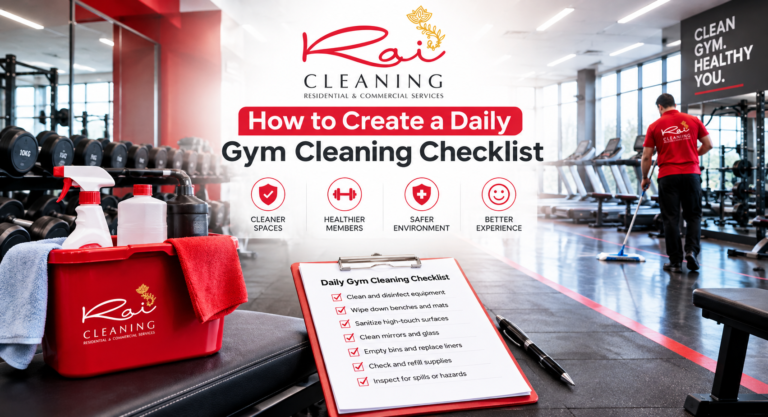
A clean gym does more than look professional. It affects how members feel when they walk through the door, how staff manage the facility, how equipment is maintained, and how confidently people use shared spaces. But creating a daily gym cleaning checklist can solve the problem of maintaining a hygienic fitness space.
The challenge is that gyms do not get dirty in one predictable way. Sweat accumulates on benches and handles. Rubber flooring collects dust, chalk, and body oils. Cardio machines are touched hundreds of times. Locker rooms become damp and heavily used. A gym can look clean from a distance while several high-touch or wet areas have already been overlooked. That is why a daily gym cleaning checklist is so useful.
Instead of relying on asking staff to “clean the gym,” a proper checklist turns cleaning into a repeatable process. It tells the team what to clean, when to clean it, who is responsible, and how the completed work should be checked.
Recent gym-cleaning resources increasingly recommend dividing cleaning by zones and by time of day rather than using one long list. This is important because an opening clean, a midday maintenance round and an end-of-day clean have different purposes.
This guide explains how to build a practical daily gym cleaning checklist that can work for a small fitness studio, personal training facility, large commercial gym or 24-hour fitness centre.
Quick Answer: What Should Be on a Daily Gym Cleaning Checklist?
A daily gym cleaning checklist should cover the entrance and reception, cardio equipment, and strength equipment. You must keep gym floors, group exercise areas, and high-touch surfaces in mind. Bathrooms, shower areas, changing rooms, and cleaning supplies are also important. But a good checklist should go further. It should divide these tasks into appropriate cleaning periods, such as:
| Cleaning period | Main purpose | Typical tasks |
|---|---|---|
| Before opening | Prepare the facility | Floors, bathrooms, equipment, reception, supplies |
| During operating hours | Maintain hygiene | High-touch surfaces, spills, toilets, bins, equipment |
| Between busy periods | Reset high-use zones | Cardio equipment, benches, mats, studios |
| Closing | Complete the daily reset | Floors, equipment, wet areas, waste, detailed cleaning |
| Final inspection | Confirm standards | Missed areas, supplies, hazards, wet floors |
This approach is more realistic than expecting one cleaner to complete every task once at the end of the day.
Why Does a Gym Need a Daily Cleaning Checklist?
A gym is a high-contact environment. Members touch treadmill handles, dumbbells, benches, machine grips, screens, lockers, door handles and other shared surfaces. At the same time, exercise produces sweat, moisture and body oils that can accumulate on equipment and flooring.
The cleaning challenge becomes even greater during peak periods. A gym that looks spotless at 6:00 am can have heavily touched equipment and busy changing rooms only a few hours later.
Current commercial gym cleaning guidance also increasingly treats the checklist as an operational system rather than simply a list of chores. It can help managers assign work, maintain consistency and identify missed areas when staffing changes.
A good gym cleaning checklist should give cleaners clear instructions,
defined responsibilities and realistic cleaning frequencies. Instead of
simply listing tasks, it should divide the facility into practical zones
so every area can be cleaned consistently and checked properly.
These tasks are useful, but they do not explain which equipment should be
cleaned, which surfaces require attention, how often the task should be
completed, or who is responsible. A stronger checklist creates a clear
operating routine.
What Makes a Good Gym Cleaning Checklist?
Clean equipment • Mop floors • Clean bathrooms
Area
Task
When
Responsible
Checked
Cardio Area
Wipe handles, controls and touchpoints
Multiple rounds
Cleaner
Manager
Free Weights
Clean benches and grips
Daily
Cleaner
Supervisor
Gym Floor
Vacuum, sweep and mop as appropriate
Daily
Cleaner
Supervisor
Bathrooms
Clean fixtures and floors
Multiple rounds
Cleaner
Manager
Reception
Clean counter and touchpoints
Daily
Cleaner
Manager
Changing Rooms
Clean benches, lockers and floors
Daily
Cleaner
Supervisor
Daily Gym Cleaning Checklist: The Complete Version
This section provides a practical daily gym deep cleaning checklist covering high-touch equipment, workout floors, mirrors, bathrooms, changing rooms, reception areas, and shared facilities. It helps gym owners and cleaning teams maintain hygiene, reduce dirt and germs, improve member safety, and keep the facility fresh and presentable every day.
1. Start With an Opening Inspection
Before cleaning begins, walk through the entire facility. Look for obvious issues that need immediate attention. Check for spills, rubbish, unpleasant odours, overflowing bins, damaged equipment, wet floors, and areas that were missed during the previous cleaning shift.
The opening inspection is particularly important because some problems are not cleaning problems at all. For example, if water is repeatedly collecting around a shower drain, simply mopping the floor every morning will not solve the underlying issue. The checklist should therefore include a small section for:
- Visible spills
- Wet floors
- Equipment issues
- Damaged surfaces
- Empty dispensers
- Unusual odours
- Blocked drains
- Missing supplies
This turns the cleaning checklist into an early-warning tool rather than just a housekeeping document.
2. Clean the Entrance and Reception Area
The entrance creates the first impression of the gym. Glass doors, reception counters, entry mats, door handles, and payment terminals can receive significant contact throughout the day. Daily cleaning should include the reception counter, visible dust, fingerprints on glass, entry doors, high-touch points, and flooring.
Do not forget the area members often overlook: the underside and edges of reception counters, shelves, display stands, and equipment around the front desk. A clean entrance tells members that cleanliness is being managed throughout the facility.
3. Clean Cardio Equipment
Cardio machines deserve special attention because members repeatedly touch the same surfaces. Your checklist should cover:
- Treadmill handles
- Treadmill controls and screens
- Exercise bike handles
- Bike seats
- Elliptical handles
- Rowing machine handles
- Stair-climber controls
- Heart-rate contact areas
- Adjustment points
However, cleaning gym equipment is not simply about spraying a product over the machine. The cleaner needs to follow the equipment manufacturer’s instructions and the cleaning-product label. The wrong chemical or excessive moisture can damage screens, upholstery, rubber, plastics or electronic components. A better checklist therefore says what surface needs attention, rather than simply saying “disinfect machine.”
4. Clean Strength Equipment
Strength-training equipment can contain many different surfaces. Think about:
- Machine grips
- Handles
- Seats
- Back pads
- Adjustment levers
- Pins
- Cable attachments
- Pull-up bars
- Squat racks
- Smith machine contact points
Sweat and body oils can accumulate on upholstery and grips. The daily checklist should also encourage staff to look into seams and edges where residue can build up over time. A quick visible wipe is useful, but it should not replace scheduled deeper cleaning.
5. Clean Dumbbells, Barbells and Weight Plates
Free-weight areas can be particularly challenging because there are so many individual items. Rather than writing “clean weights,” create a practical routine.
Dumbbell handles, kettlebell handles, barbells, and frequently touched plates should receive regular attention. At closing, the area can also be reset by returning weights to their proper storage positions. This gives the cleaning team two objectives:
Hygiene + presentation.
A clean but disorganised weight area still makes a facility feel poorly maintained.
6. Clean Gym Floors
Gym flooring should be cleaned according to the material. Rubber flooring, vinyl, carpet, timber, tiles and other surfaces may require different methods and products. The daily checklist should identify the flooring type instead of giving cleaners one universal instruction. Daily floor maintenance can include:
| Floor area | Daily focus |
|---|---|
| Main gym floor | Remove dust, debris and visible residue |
| Cardio area | Clean around and beneath accessible equipment |
| Free-weight area | Remove chalk, dirt and debris |
| Studio floor | Sweep/vacuum and mop as appropriate |
| Reception | Vacuum/sweep and spot clean |
| Changing rooms | Remove moisture and debris |
| Bathrooms | Clean and mop using suitable products |
Spills should never simply be added to the end-of-day cleaning list. They should be addressed as soon as they are identified, with appropriate controls around wet floors.
7. Don’t Forget High-Touch Surfaces
This is one of the most important sections of a gym cleaning checklist. High-touch areas can include:
- Door handles
- Light switches
- Wipe dispensers
- Handrails
- Water fountain controls
- Locker handles
- Reception touchpoints
- Vending-machine buttons
- Shared accessories
- Frequently handled equipment controls
These areas may require attention more than once per day depending on traffic. That is why a good gym cleaning program should use cleaning rounds, rather than assuming everything needs to happen during one closing shift.
8. Clean Group Fitness and Studio Areas
Group classes create a different cleaning pattern. Yoga studios, functional training rooms, Pilates spaces, cycling studios, and personal training areas can experience rapid turnover between classes. Where shared mats or equipment are provided, they should be included in the facility’s cleaning routine.
The same applies to:
- Resistance bands
- Foam rollers
- Exercise balls
- Benches
- TRX equipment
- Training platforms
- Mirrors
- Studio floors
If the gym runs back-to-back classes, the cleaning schedule should include a short reset between sessions instead of waiting until closing. Several current checklist resources specifically identify group fitness areas as a separate cleaning zone because they operate differently from the main gym floor.
9. Clean Changing Rooms and Locker Areas
Changing rooms should never be treated as an optional add-on to gym cleaning. Members notice these spaces quickly. Your daily checklist should cover lockers, benches, floors, mirrors, sinks, waste bins, and other frequently touched surfaces. The team should also look for:
- Hair and debris
- Wet patches
- Empty soap dispensers
- Empty paper towel dispensers
- Unpleasant odours
- Overflowing bins
- Visible residue
Where traffic is high, changing rooms may require several checks throughout the day rather than one daily clean.
10. Clean Gym Bathrooms
Bathrooms should have their own checklist. A simple “bathroom cleaned” tick box is not enough for a busy commercial facility.
Consider separating:
Fixtures → Sinks → Toilets → Floors → Mirrors → Touchpoints → Supplies → Waste
Soap, toilet paper, paper towels and other consumables should also be checked. This is where a checklist becomes valuable to management. If a member complains about an empty dispenser, the manager can determine whether the problem was missed during the cleaning round or whether the supply level needs to be changed.
Gym Cleaning vs Gym Sanitisation: What’s the Difference?
This is an important distinction and one that should be clear to gym owners. Cleaning generally focuses on removing dirt, sweat, dust, oils, residue and other visible or physical contamination.
Sanitisation/disinfection involves using a suitable product or process intended to reduce or inactivate microorganisms according to its label and applicable requirements. They are not interchangeable terms.
The TGA explains that disinfectant products are regulated according to their claims and intended use, while general cleaners and products without disinfectant claims are treated differently. Our blog for Gym Cleaning vs Gym Sanitization can explain when routine cleaning is appropriate, when sanitisation or disinfection is required, and why the two processes should not be treated as identical.
How Often Should a Gym Be Cleaned?
There is no single frequency that works for every gym. A small personal-training studio with 30 members may require a different schedule from a 24-hour commercial gym serving hundreds or thousands of visits. Traffic, facility size, operating hours, equipment density, wet areas and member behaviour all affect the required frequency. A practical framework is:
| Area | Suggested approach |
|---|---|
| High-touch equipment | Multiple checks based on traffic |
| Cardio equipment | Daily + additional high-traffic rounds |
| Free weights | Daily |
| Gym floors | Daily + immediate spill response |
| Bathrooms | Multiple checks in busy facilities |
| Showers | Daily and more often when needed |
| Changing rooms | Daily + traffic-based checks |
| Reception | Daily + touchpoint rounds |
| Group studios | Between classes where required |
| Deep floor cleaning | Scheduled separately |
| Detailed equipment cleaning | Weekly or scheduled maintenance |
| Hard-to-reach areas | Weekly/monthly depending on facility |
These frequencies are a starting framework, not a universal legal requirement. Current Australian gym-cleaning resources similarly recommend combining daily work with deeper weekly and monthly tasks.
Daily Does Not Mean Everything Needs Deep Cleaning Every Day
This distinction can save gym operators a lot of unnecessary work. A daily clean maintains the facility. A deep clean targets accumulated dirt and areas that routine cleaning does not fully address. For example, daily work might involve wiping equipment touchpoints and maintaining floors.
A scheduled deeper clean may involve detailed work around equipment bases, floor edges, grout, drains, difficult-to-reach surfaces or other areas that require additional time. Trying to deep-clean the entire facility during every daily shift may be inefficient.
Ignoring deeper cleaning altogether is equally problematic. The solution is a layered cleaning schedule.
What Should You Ask a Gym Cleaning Company?
Before hiring a commercial gym cleaning provider, ask:
| Question | Why it matters |
|---|---|
| Do you clean fitness equipment? | Equipment requires appropriate methods |
| Do you clean showers and changing rooms? | Wet areas require dedicated attention |
| Can you work after hours? | Reduces disruption |
| Do you provide a cleaning checklist? | Creates consistency |
| Is work inspected? | Helps maintain standards |
| How do you handle high-touch areas? | Frequency matters |
| What products do you use? | Surface compatibility matters |
| Can the schedule be customised? | Every gym has different traffic |
| How are spills handled? | Safety requires prompt response |
| Do you provide regular deep cleaning? | Daily cleaning does not cover everything |
The right provider should be able to explain the cleaning process rather than simply offering a generic list of services.
A simple daily routine for keeping gym equipment, workout areas,
bathrooms and shared facilities clean, hygienic and ready for members.
Daily Gym Cleaning Checklist
🌅 Opening
☀️ During the Day
🌙 Closing
Frequently Asked Questions About Daily Gym Cleaning
How often should gym equipment be cleaned?
High-touch equipment should be checked and cleaned regularly throughout the day, with frequency adjusted according to member traffic. A more detailed cleaning should also form part of the closing or scheduled maintenance routine.
Should gym equipment be cleaned after every use?
Member wipe-downs can supplement the facility’s cleaning program, but they should not be considered a replacement for professional or staff-led cleaning rounds.
What should be cleaned in a gym every day?
Daily attention should generally cover equipment touchpoints, floors, bathrooms, changing rooms, showers, reception areas, high-touch surfaces, waste and hygiene supplies.
How often should gym bathrooms be cleaned?
Busy gyms may need bathroom checks multiple times during operating hours. At minimum, bathrooms should be included in the daily cleaning schedule, with frequency adjusted to traffic and facility use.
Should gym floors be mopped every day?
Many hard gym floors require regular daily maintenance, but the correct method depends on the flooring material. Rubber, vinyl, timber and other surfaces should be cleaned according to their care requirements.
Is gym cleaning the same as sanitisation?
No. Cleaning primarily removes dirt and residue, while sanitisation or disinfection involves products or processes intended to reduce or inactivate microorganisms according to their intended use and instructions.
Can I use the same cleaner on all gym equipment?
Not necessarily. Equipment manufacturers may specify particular cleaning products or methods, especially for screens, upholstery, rubber components and electronic controls.
Does disinfectant work immediately after spraying?
Not necessarily. Follow the product label, including any required contact time. The TGA specifically identifies contact time as an important part of appropriate disinfectant use.
Ready for a Cleaner, Healthier Gym?
Keep gym equipment, workout areas, bathrooms, changing rooms and high-touch surfaces clean with a professional cleaning team. Contact RaiCleaning for a customised gym cleaning solution.
Final Thoughts: The Best Gym Cleaning Checklist
Creating a daily gym cleaning checklist is not about producing the longest possible list of cleaning jobs. It is about creating a system that a team can follow consistently.
A strong checklist tells cleaners where to work, when to do it, and how the result should be checked. It separates high-touch equipment from wet areas. This also recognises that bathrooms may need more frequent attention than low-traffic spaces. It distinguishes routine cleaning from deeper scheduled cleaning. It accounts for the difference between cleaning and disinfection. And most importantly, it adapts to the actual traffic and operating pattern of the gym.
If your fitness facility has high daily traffic, extended opening hours, multiple training zones, or specialist wet areas, a customised commercial cleaning schedule can provide a more consistent approach than relying entirely on general staff duties.