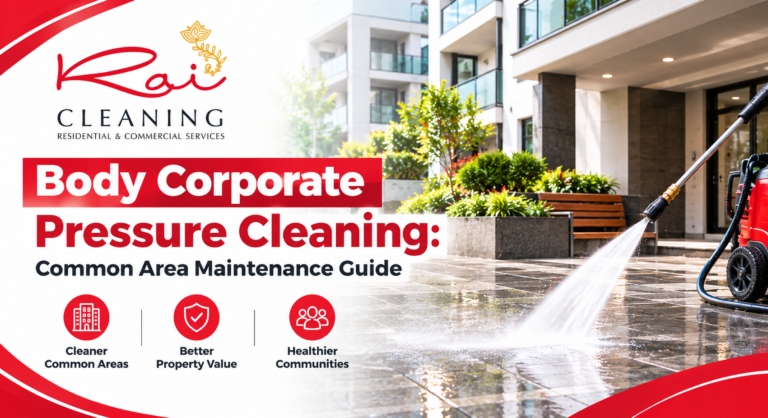
Body corporate properties face a constant battle against dirt, mould, algae, tyre marks, and weather-related buildup. Shared driveways, pathways, and outdoor common areas receive more traffic than individual properties. This makes them difficult to keep clean with routine mopping alone. This is where professional body corporate pressure cleaning can make a major difference.
Pressure cleaning provides a practical way to remove built-up from hard external surfaces. It also helps body corporate committees, owners corporations, and property managers maintain a cleaner property.
In Victoria, an owners corporation is responsible for managing and maintaining property. This may include pathways, driveways, foyers, stairwells, fences, and other shared areas. At RaiCleaning, we help body corporates address these exterior cleaning challenges. In this guide, you will know the challenges of body corporate pressure cleaning & how professional deep cleaning solutions are useful.
Why Body Corporate Properties Need More Than Routine Cleaning
A body corporate property is different from a standard residential home. Hundreds of visitors and vehicles may use the same pathways, entrances, and outdoor facilities. Rain, dust, vehicle fluids, and organic growth can accumulate heavy dust compared to routine cycles. A weekly sweep may remove loose debris, but it will not necessarily remove embedded dirt, black mould, and surface staining.
Over time, these contaminants can make well-maintained properties appear neglected. Some contaminants can contribute to slippery surfaces when moisture is involved. Pressure cleaning must be the core vital part of a body corporate property maintenance program, rather than an occasional service.
Consumer Affairs Victoria recommends that owners corporations inspect common property regularly and use the findings to help determine maintenance programs and budgets.
The Growing Problem: Neglected Common Areas
One of the biggest problems facing body corporates is maintaining the exterior look. Pressure cleaning is postponed because the building may appear acceptable from a distance. However, problems tend to become much more obvious when they are overlooked.
A driveway may develop dark tyre marks and oil spots or a shaded pathway may develop algae or mould. Similarly, a courtyard may become covered in atmospheric grime & communal entrance may develop dirt accumulation.
Individually, these issues may appear minor. But overall, they can change the appearance and usability of an entire property. The result can be resident complaints, poor first impressions, and unnecessary pressure on the body corporate committee. The better approach is to identify problem areas early and introduce them into a planned maintenance cycle.
How Body Corporate Pressure Cleaning Helps
Professional pressure cleaning can restore heavily used external surfaces. Using controlled water pressure and appropriate cleaning techniques, all accumulated contamination can be removed. The objective is not simply to make a surface look brighter. A properly planned service should consider:
Surface type: Concrete, pavers, brick, tiles and other materials can respond differently to pressure and cleaning products.
Surface condition: Older, damaged or deteriorated surfaces may require a more controlled approach.
Type of contamination: Mould, algae, oil, dirt and organic deposits may require different treatment methods.
Water management: Runoff needs to be considered carefully, particularly around gardens, drains and shared pedestrian areas.
Resident access: Body corporate cleaning often needs to be organised around residents, vehicles and building access.
Safety: Wet surfaces, hoses and equipment need to be managed appropriately during the cleaning process.
This is why professional body corporate pressure cleaning should not simply involve using the highest possible pressure. The correct pressure and cleaning method should be selected for the specific surface.
Common Body Corporate Areas That Need Pressure Cleaning
Body corporate properties have several shared areas that require pressure cleaning. High-traffic spaces such as driveways, car parks, pathways, entrances and courtyards can become difficult to maintain. High-pressure water cleaning helps restore these surfaces and keeps common areas better presented.
1. Shared Driveways
Driveways are among the most heavily used external areas in residential complexes. Vehicles travel over the same sections, while tyre marks and dirt gradually accumulate. Over time, the driveway mud deposits & dirt buildup become difficult to clean. Pressure cleaning can help restore the appearance of shared driveways and create a cleaner entrance to the property.
2. Car Parks and Parking Areas
Car parks are another major problem area. Unlike residential driveways, body corporate parking areas may receive daily traffic from dozens or even hundreds of vehicles. This creates a continuous source of contamination.
Tyre marks, dust, leaves and general vehicle grime can gather around parking bays and traffic lanes. Regular pressure cleaning can form part of a preventative maintenance schedule for these areas.
3. Shared Pathways
Pathways connect residents with entrances, parking areas, gardens, recreation spaces and other parts of the property. Because pedestrians use them every day, their condition is particularly noticeable.
Organic growth is especially problematic on shaded sections where moisture can remain for longer periods. Pressure cleaning can help remove dirt and contamination to improve the overall presentation.
4. Building Entrances
The entrance is often the first part of a body corporate property visitors see. Unfortunately, it is also one of the areas most exposed to foot traffic. Dust, dirt, and atmospheric pollution can accumulate around entrance paths & surrounding surfaces. A clean entrance creates a much better first impression for residents, visitors, prospective buyers and tenants.
5. Courtyards
Communal courtyards can gradually lose their appearance because of weather exposure, leaves, dirt and organic buildup. Pressure cleaning can help rejuvenate concrete, pavers and other suitable hard surfaces. This is particularly useful before community events, inspections or scheduled property presentation work.
6. Pool Surrounds
Pool surrounds require particular attention because they combine moisture, heavy foot traffic and outdoor exposure. Dirt and organic buildup can make surrounding surfaces appear neglected. A suitable cleaning method can help maintain poolside hard surfaces while taking care around surrounding landscaping and pool infrastructure.
7. Bin Areas
Bin storage areas can accumulate dirt, spills, food residue, and unpleasant contaminants. While pressure cleaning does not replace routine waste management, scheduled deep cleaning can help keep these areas more hygienic and presentable.
8. Outdoor Common Areas
Garden paths and outdoor areas can collect leaves, soil, mud, and organic deposits. Cleaning these surfaces periodically can help maintain a more consistent appearance throughout the property.
Algae and Organic Growth: A Major Body Corporate Challenge
One of the most noticeable problems in shared outdoor areas is organic growth. Moisture and accumulated organic matter can create favourable conditions for algae, moss, and similar contamination. This is particularly noticeable around:
- Shaded pathways
- Garden edges
- Damp courtyards
- Concrete driveways
- Pavers
- Pool surrounds
- Retaining walls
- Outdoor stairs
Simply sweeping these surfaces will not remove established growth.
Pressure cleaning can help remove surface contamination and restore the appearance of affected hard surfaces. However, cleaning should be combined with identifying why the area repeatedly becomes contaminated. That is why a professional inspection should look beyond the visible dirt.
Why Slippery Common Areas Should Not Be Ignored
A dirty surface is not always just an appearance problem. Organic growth, moisture and accumulated grime can affect how a surface looks and feels underfoot. This is particularly important in shared areas where residents, visitors, children and older people may be walking regularly.
Consumer Affairs Victoria notes that owners corporations have responsibilities relating to the maintenance of common property, and maintenance planning should consider the condition of those areas and future work requirements. For body corporate committees, the practical lesson is simple:
Do not wait until common areas become visibly neglected before scheduling maintenance.
Regular inspection can identify surfaces that need cleaning before contamination becomes significantly harder to manage.
Pressure Cleaning vs Ordinary Cleaning
Ordinary cleaning is useful for removing loose dust, litter and surface debris, but it may not be enough for heavily soiled body corporate areas. Pressure cleaning uses controlled water pressure to tackle deeper grime, mould, algae, stains and accumulated dirt across shared outdoor surfaces. Before scheduling exterior maintenance, learn how power pressure washing vs soft cleaning affects different surfaces.
| Cleaning Factor | Ordinary Cleaning | Pressure Cleaning |
|---|---|---|
| Loose Dust & Debris | ✓ Effective | ✓ Effective |
| Embedded Dirt | Limited Results | ✓ Deep Cleaning |
| Mould & Algae | Limited Effectiveness | ✓ Targets Built-Up Growth |
| Oil & Grease Marks | Often Difficult | ✓ Suitable Cleaning Method |
| Tyre Marks | Limited Results | ✓ Helps Remove Buildup |
| Large Driveways | Time-Consuming | ✓ Efficient for Large Areas |
| Car Parks | Basic Surface Maintenance | ✓ Deep Surface Cleaning |
| Shared Pathways | ✓ Suitable for Routine Cleaning | ✓ Suitable for Deep Cleaning |
| Surface Presentation | Basic Maintenance | ✓ Restores Cleaner Appearance |
| Best Use | Routine Maintenance | Periodic Deep Cleaning |
Why DIY Pressure Cleaning Can Be Risky
A pressure washer may look simple to operate, but excessive pressure can damage certain surfaces. Potential problems include:
- Surface etching
- Damage to deteriorated concrete
- Damage to mortar joints
- Water entering vulnerable areas
- Damage to coatings
- Displacement of jointing material
- Excessive runoff
- Damage to nearby plants
The objective should never be to use maximum pressure. The objective is to achieve the required cleaning result while protecting the surface. Professional cleaners can assess the material, contamination and surrounding environment before selecting the appropriate cleaning approach.
RaiCleaning’s Body Corporate Pressure Cleaning Approach
At RaiCleaning, we understand that cleaning a body corporate property requires more planning than cleaning a standard driveway. Our approach focuses on practical, property-specific cleaning rather than applying the same process to every surface.
1. Site Assessment
We begin by assessing the areas that require cleaning. This allows us to identify:
- Surface materials
- Contamination levels
- Access requirements
- High-traffic zones
- Problem areas
- Landscaping around cleaning zones
- Potential water runoff considerations
2. Identify the Right Cleaning Method
Different surfaces can require different pressure levels and cleaning techniques. The cleaning process should therefore be matched to the material and condition of the surface. This helps reduce the risk of unnecessary surface damage while still targeting stubborn contamination.
3. Prepare the Area
Before cleaning begins, access requirements are considered. Depending on the property, this may involve coordinating around resident vehicles, pedestrian access, and parking bays. Good preparation helps the cleaning process run more smoothly.
4. Pressure Clean the Target Areas
The selected areas are then cleaned using an appropriate pressure cleaning process. Flat hard surfaces may require different equipment and techniques from vertical surfaces or delicate areas. The goal is consistent cleaning without unnecessarily aggressive treatment.
5. Final Inspection
After cleaning, the work area should be inspected to identify any remaining contamination or areas requiring additional attention. This final check helps ensure the agreed cleaning scope has been completed properly.
Creating a Body Corporate Pressure Cleaning Schedule
There is no single pressure cleaning frequency that is suitable for every body corporate property. The ideal schedule depends on:
- Property size
- Number of residents
- Vehicle traffic
- Surface materials
- Local weather
- Amount of shade
- Tree coverage
- Moisture levels
- Existing contamination
- Property presentation standards
A low-traffic complex may require less frequent deep exterior cleaning. A large apartment complex with extensive parking, pathways and communal areas may require more frequent maintenance.
Instead of selecting a frequency simply because another property uses it, body corporate managers should assess the actual condition of their common areas.
Consumer Affairs Victoria recommends regular inspection of common property and using inspection findings to inform future maintenance programs and budgets.
A Practical Maintenance Cycle
Keep shared areas consistently maintained with a practical cleaning cycle tailored to your property’s usage, condition and common-area requirements.
Weekly Care
Sweep shared areas, remove litter and complete quick visual checks.
WeeklyMonthly Check
Inspect driveways, entrances, pathways and high-traffic areas.
MonthlyQuarterly Clean
Assess exterior areas and schedule pressure cleaning where needed.
QuarterlyLong-Term Review
Review common areas and plan six-monthly and annual maintenance.
6–12 MonthsNeed a cleaning schedule for your property? Request a custom quote from RaiCleaning.
☏ Request Custom Quote WhatsApp: +61 0405 007 786How Pressure Cleaning Supports Property Presentation
A body corporate property is judged by its shared spaces. Residents may maintain their individual apartments beautifully, but visitors still see the driveway, entrance, pathways, gardens, parking areas and communal facilities.
Poorly maintained common areas can therefore create a negative perception of the entire property. Clean external surfaces can help create a more consistent appearance across the development. This matters particularly when:
- Properties are being sold
- New residents are moving in
- Property inspections are scheduled
- Rental properties are being advertised
- Owners corporation meetings are approaching
- Building managers are reviewing maintenance
- Common areas are becoming visibly neglected
Professional cleaning cannot solve every property maintenance issue, but it can form an important part of a broader maintenance strategy.
Body Corporate Pressure Cleaning for Melbourne Properties
Melbourne properties experience changing weather conditions throughout the year, meaning exterior surfaces are exposed to rain, wind, dust, falling leaves and fluctuating moisture levels. Some areas of a property may dry quickly, while shaded sections can retain moisture for longer. This can contribute to recurring organic buildup in susceptible areas.
For Melbourne body corporates, pressure cleaning may therefore be useful for:
- Apartment complexes
- Townhouse developments
- Residential estates
- Community properties
- Shared driveways
- Common parking areas
- Commercial-residential developments
- Strata-style properties
- Shared outdoor facilities
The important point is to treat each property individually. A large apartment complex should not necessarily receive the same cleaning program as a six-townhouse development.
Why Preventive Cleaning Makes Sense
Waiting until a body corporate property looks extremely dirty can make the cleaning job more difficult. Accumulated contamination may become more established, while residents become increasingly aware of neglected areas.
Preventive maintenance provides a different approach. Instead of asking “How do we clean this once it becomes a problem?”, the committee can ask “How do we prevent common areas from reaching that condition?”
This shift from reactive cleaning to planned maintenance is particularly relevant for owners corporations.
Consumer Affairs Victoria states that good maintenance can help retain building value and make properties more enjoyable to live in, while poor maintenance or neglect can contribute to damage and safety hazards.
Why Choose RaiCleaning for Body Corporate Pressure Cleaning?
Reliable pressure cleaning backed by experienced professionals, practical methods and dependable service.
19+ Years Experience
Decades of professional cleaning experience
Supportive Cleaning Team
Helpful professionals throughout every service
24/7 Service Access
Flexible support when your property needs
Insured Cleaning Professionals
Professional service with appropriate insurance
Competitive Pricing
Clear pricing for planned cleaning
Pressure Cleaning Expertise
Specialists in exterior surface cleaning
Low Pressure Methods
Controlled pressure for vulnerable surfaces
Soft Washing Solutions
Gentle cleaning for delicate exterior areas
Consistent Cleaning Results
Reliable results across shared property areas
A Cleaner Body Corporate Starts With Planned Maintenance
Body corporate pressure cleaning should not be treated as a last-minute cosmetic service.
Shared driveways, pathways, car parks, entrances and outdoor areas experience constant use and environmental exposure. Without regular maintenance, dirt, mould, algae, oil marks and grime can gradually change the appearance and condition of these spaces.
Professional pressure cleaning provides an effective way to tackle accumulated contamination and support a wider common-property maintenance program.
For Victorian owners corporations, maintaining common property is an important responsibility, and Consumer Affairs Victoria recommends structured maintenance planning, inspections and record keeping. RaiCleaning can help turn pressure cleaning from an occasional reaction into a planned part of your property’s maintenance routine.
Keep Your Common Areas Clean & Presentable
Need reliable pressure cleaning for your body corporate property? Get a tailored cleaning solution from RaiCleaning.