If you’re trying to work out exactly what’s covered by retail store cleaning Melbourne providers offer, the short answer is: a lot more than vacuuming and wiping down counters. A proper retail clean covers everything from the entrance and shop floor to shelving, checkout areas, restrooms, and staff spaces.
This matters because a retail store isn’t just a workplace; it’s a space customers judge within seconds of walking in. Dusty shelves, sticky floors, or a messy entrance can undo a lot of good work on the sales floor. In this guide, we’ll break down exactly what’s typically included in a professional retail clean, how often different areas should be cleaned, and what to look for when choosing a retail cleaning company in Melbourne.
What Is Retail Store Cleaning?
Retail store cleaning is a structured, professional cleaning service designed specifically for shops, stores, and other customer-facing retail spaces. It’s different from basic household cleaning in a few important ways: retail spaces deal with far higher foot traffic, a mix of customer-facing and staff-only areas, product displays that need careful handling, and operating hours that cleaning has to work around.
A retail clean typically covers:
- Customer-facing areas like the entrance and shop floor
- High-traffic zones near doorways, checkouts, and popular aisles
- Product displays and shelving
- Floors, using methods suited to the specific flooring type
- Glass, mirrors, and storefront windows
- Entryways and mats
- Restrooms, if the store has customer or staff facilities
- Staff-only areas like break rooms and storage
- High-touch surfaces such as door handles and counters
- Waste management and bin removal
Because every store is laid out differently, a professional retail clean is usually planned around the specific store’s traffic patterns, opening hours, and layout, not a generic checklist applied the same way everywhere.
What Is Included in Retail Store Cleaning in Melbourne?
This is the part most retail owners actually want answered, so here’s a breakdown by area.
Entrance and Reception Area Cleaning
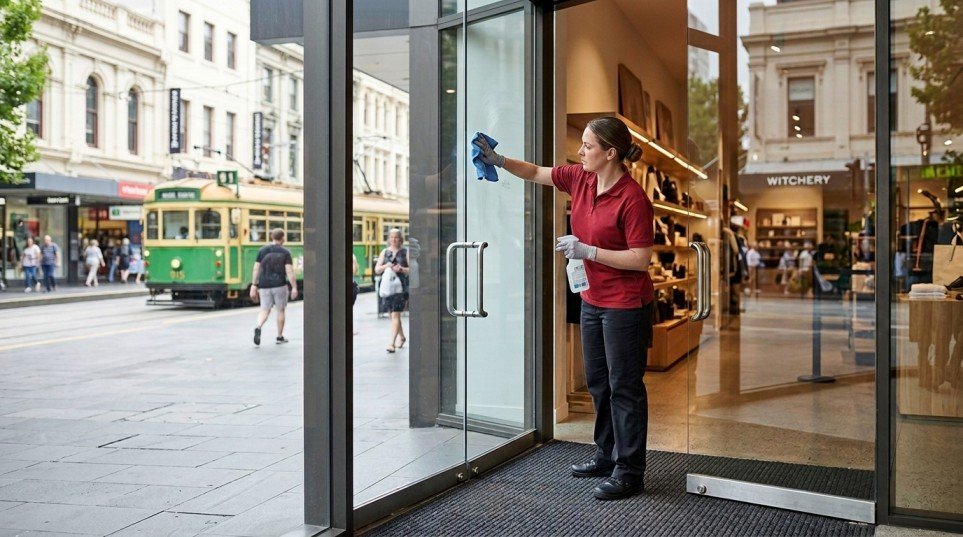
The entrance is the first thing customers see, so it sets the tone before they’ve even looked at a single product. This typically includes:
- Cleaning door handles and push plates
- Wiping down entry glass
- Cleaning entrance floors and mats
- Dusting door frames
- Removing fingerprints and visible marks
A clean, streak-free entrance makes a store feel cared for a small detail that has a real effect on first impressions.
Retail Floor Cleaning
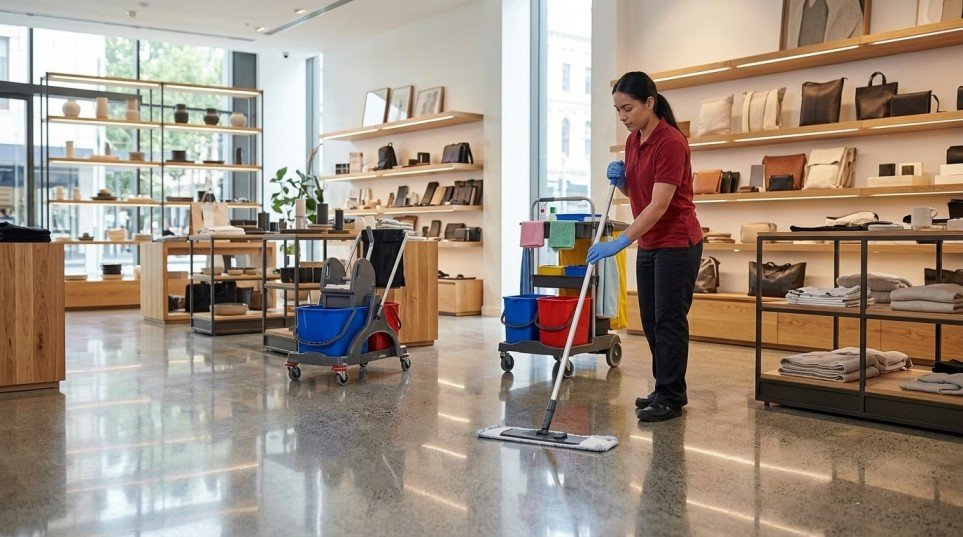
Floor cleaning is central to any retail clean, and the method used depends heavily on the flooring material. Common tasks include:
- Vacuuming carpeted areas
- Sweeping and mopping hard floors
- Spot cleaning spills and marks
- Extra attention to high-traffic zones near entrances and checkouts
Tiles, vinyl, polished concrete, hardwood, and carpet all respond differently to cleaning products and equipment, so an experienced cleaner adjusts their approach depending on what’s underfoot rather than using the same method everywhere.
Shelves, Displays, and Product Areas
Shelving and display areas need a careful touch, since cleaners are often working around merchandise rather than an empty room. This usually covers:
- Dusting shelving units
- Wiping down display fixtures
- Cleaning countertops and checkout surfaces
- Removing fingerprints and visible marks from display glass
Cleaners generally work carefully around stock and displays, rather than moving or handling merchandise unnecessarily.
Glass and Window Cleaning
Clean glass makes a noticeable difference to how a retail space looks from both inside and out. Retail window cleaning Melbourne businesses often request as part of their regular clean covers:
- Storefront glass
- Interior glass partitions
- Glass doors
- Display windows
- Mirrors
Streaky or dirty glass is one of the fastest ways a store can look neglected, even if everything else is spotless.
Checkout and High-Touch Surfaces
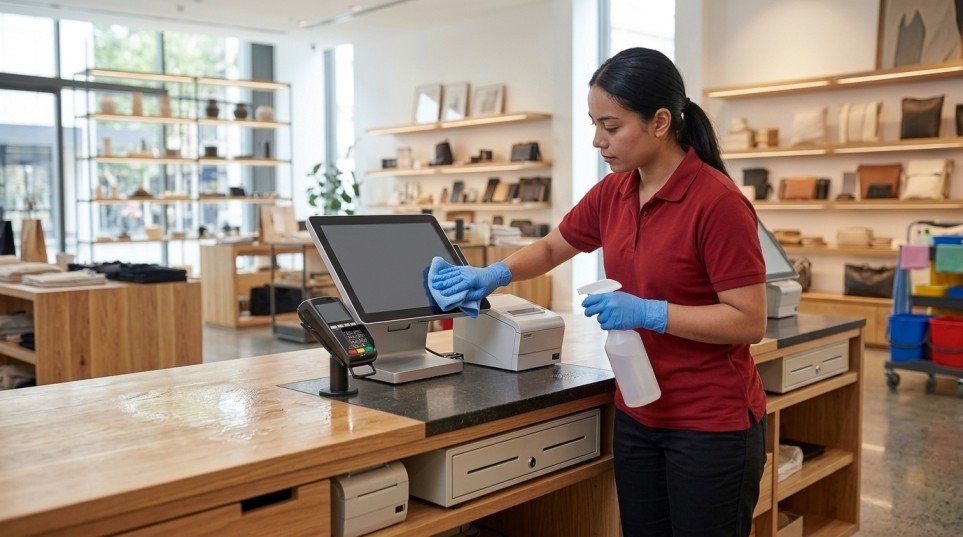
Checkout counters and other shared surfaces get touched constantly throughout the day, which makes them a priority area. This includes:
- Countertops and POS areas
- Touch screens and eFTPOS terminals
- Door handles and rails
- Light switches
- Other shared, frequently touched surfaces
Regular cleaning of these areas is about good hygiene practice it’s worth noting that no cleaning process eliminates all germs, but consistent attention to high-touch surfaces is a sensible part of a hygienic retail environment.
Restroom Cleaning and Sanitization
If a store has customer or staff restrooms, these need consistent attention because they directly shape how customers feel about the store. This typically covers:
- Toilets and basins
- Taps and fittings
- Mirrors
- Restroom floors
- Dispensers (soap, paper towel, sanitizer)
- Odour control
- Bin emptying
A restroom that’s overlooked can undo the impression created by a spotless shop floor, so it’s rarely treated as an afterthought in a proper retail clean.
Staff Rooms and Back-of-House Areas
Cleaning shouldn’t stop at the areas customers see. Staff rooms, break areas and storage spaces matter too, and usually include:
- Staff break rooms and small kitchens
- Storage areas
- Staff bathrooms
- Internal corridors
A clean back-of-house area supports a more pleasant, hygienic workplace for staff, not just a polished front for customers.
Rubbish Removal
Waste management is a simple but essential part of retail cleaning, covering:
- Emptying bins throughout the store
- Replacing bin liners
- Separating waste where the store requires it
- Keeping bin storage areas tidy
- Managing accumulated waste so it doesn’t build up between cleans
How Often Should a Retail Store Be Cleaned?
Cleaning frequency isn’t one-size-fits-all. It depends on:
- Customer foot traffic
- Store size
- Number of employees
- Type of retail business
- Opening hours
- Flooring type
- Restroom usage
- Seasonal demand (like the lead-up to Christmas)
Here’s a general guide to how cleaning tasks are usually spread out:
Daily Cleaning
Covers high-traffic areas and essential hygiene tasks floors, entrances, checkout surfaces, restrooms, and bins.
Weekly Cleaning
Covers deeper tasks and less frequently used areas, such as detailed shelving cleans or back-of-house spaces.
Periodic / Deep Cleaning
Covers carpets, windows, floor stripping or polishing, and other areas that need more thorough, less frequent attention.
The right schedule ultimately comes down to what suits your specific store, which is why most retail cleaning plans are customised rather than fixed.
Why Professional Retail Cleaning Matters for Melbourne Businesses
Better Customer Experience
A clean, well-presented store creates a more welcoming environment, which supports a better overall shopping experience.
Professional Brand Image
Clean floors, glass, displays, and counters all contribute to how professional a store looks often without customers consciously noticing why it feels that way.
Workplace Hygiene
Regular cleaning helps maintain a more hygienic environment for both staff and customers moving through the space each day.
Better Floor and Surface Maintenance
Routine cleaning can help prevent dirt and grime from building up and potentially affecting surfaces over time.
Less Disruption for Store Staff
Bringing in professional cleaners frees up staff to focus on retail operations and customer service, rather than cleaning duties.
Retail Cleaning During Business Hours vs After Hours
During Business Hours
Potential advantages:
- Continuous maintenance throughout the day
- Immediate response to spills or messes
- Flexible cleaning that adapts to what’s needed in the moment
Potential challenges:
- Customers are present, so cleaning needs to work around them
- Some tasks are harder to complete without disrupting shoppers
After-Hours Cleaning
Potential advantages:
- Less disruption to customers
- Easier to complete deep cleaning tasks
- More efficient floor and restroom cleaning without foot traffic
The best approach depends on your store’s opening hours, layout, and operational needs; many retail businesses use a combination of both.
Eco-Friendly Retail Cleaning in Melbourne
Product selection matters in a retail environment where staff and customers are present regularly. Rai Cleaning promotes an approach built around:
- Eco-friendly cleaning products
- Non-toxic cleaning methods
- Health-conscious cleaning practices
- Sustainable cleaning approaches
The right product for a job depends on the surface type, the specific cleaning task, safety considerations, and the overall store environment which is why a one-size-fits-all product approach isn’t ideal for retail spaces.
What Should You Look for in a Retail Cleaning Company?
Here’s a practical checklist to work through when comparing options:
- Experience with commercial cleaning
- Specific retail cleaning experience
- Flexible scheduling around your trading hours
- Trained cleaning staff
- Professional-grade equipment
- Appropriate, safe cleaning products
- Attention to high-traffic areas
- Clear, responsive communication
- Customised cleaning plans rather than generic packages
- Transparent pricing
- Reliable, consistent service
- Ability to work around business hours without disrupting operations
These points apply whether you’re comparing professional retail cleaning services or broader commercial cleaners in Melbourne.
Why Choose Rai Cleaning for Retail Store Cleaning in Melbourne?
Rai Cleaning provides commercial cleaning services across Melbourne, with retail cleaning listed among its core services. The business has been operating for 19+ years and builds cleaning plans around each store’s layout, traffic and schedule rather than applying a fixed template.
Rai Cleaning’s retail cleaning approach includes customised cleaning plans, eco-friendly products, an experienced cleaning team, and flexible scheduling that can work around trading hours to minimise disruption to your business. The team also offers related services that many retail businesses combine with their regular clean, including professional window cleaning and carpet steam cleaning for stores with carpeted areas.
If you’re comparing this to an office environment, it’s worth noting the two aren’t the same office cleaning tends to focus more on desks, meeting rooms, and internal workspaces, while retail cleaning gives more weight to customer-facing presentation, product displays, and higher foot traffic.
Retail Cleaning Checklist
A simple checklist you can save or use to review your own store’s cleaning:
- Entrance and doors cleaned
- Glass and windows cleaned
- Floors vacuumed/swept
- Floors mopped
- Shelves dusted
- Displays cleaned
- Checkout counters cleaned
- High-touch surfaces wiped down
- Restrooms cleaned
- Staff areas cleaned
- Bins emptied
- Visible marks and spills removed
- Final inspection completed
FAQs About Retail Store Cleaning in Melbourne
What is included in retail store cleaning?
Retail store cleaning typically covers the entrance, floors, shelving, product displays, glass, checkout areas, high-touch surfaces, restrooms, staff areas, and waste removal, tailored to the specific store’s layout and traffic.
How often should a retail store be professionally cleaned?
It depends on foot traffic, store size, and operating hours. Most stores need daily attention for high-traffic areas, weekly cleaning for deeper tasks, and periodic deep cleans for carpets and floors.
How much does retail cleaning cost in Melbourne?
Pricing varies based on store size, cleaning frequency, number of areas covered, flooring type, and operating schedule. Contact a provider directly for a quote based on your specific store.
Can retail cleaners work after business hours?
Yes, many retail cleaning services, including Rai Cleaning, offer after-hours scheduling to minimize disruption to trading and customers.
Do retail cleaning services include window cleaning?
Yes, storefront and interior glass cleaning is a common part of retail cleaning and can also be arranged as a standalone window cleaning service.
Do retail cleaners clean customer restrooms?
Yes, where a store has customer or staff restrooms, these are typically included as part of a full retail cleaning service.
Can retail cleaning schedules be customized?
Yes, cleaning frequency and scope are usually built around the store’s size, traffic patterns, and opening hours rather than a fixed package.
What is the difference between retail cleaning and office cleaning?
Retail cleaning puts more focus on customer-facing presentation floors, glass, displays, and high-traffic areas while office cleaning centers more on desks, meeting rooms, and general workspace tidiness.
How can I get a retail cleaning quote in Melbourne?
You can contact Rai Cleaning directly by phone or email to discuss your store’s size, layout, and cleaning needs and receive a tailored quote.
Featured Snippet Answers
What does retail store cleaning include?
Retail store cleaning includes entrance and floor cleaning, shelving and display dusting, glass and window cleaning, checkout and high-touch surface cleaning, restroom sanitisation, staff area cleaning, and rubbish removal tailored to the store’s layout and traffic.
How often should a retail store be cleaned?
Frequency depends on foot traffic, store size, and opening hours. High-traffic areas usually need daily cleaning, some tasks suit a weekly schedule, and carpets, floors, and windows benefit from periodic deep cleaning.
What is included in commercial retail cleaning?
Commercial retail cleaning covers customer-facing and staff areas alike: floors, shelving, glass, checkout counters, high-touch surfaces, restrooms, staff rooms, and waste management, planned around the store’s operating hours.
How much does retail cleaning cost in Melbourne?
Retail cleaning costs vary depending on store size, cleaning frequency, flooring type, and the areas covered. There’s no fixed price providers typically calculate a quote based on your store’s specific requirements.