Factories and industrial facilities are nothing like a standard office. Between production areas, machinery, industrial flooring, warehousing, and loading docks, these spaces deal with dust, grease, oil residue, packaging waste, and high foot traffic every single day. Add in staff facilities that also need regular attention, and it’s clear why cleaning a factory takes a different approach altogether.
This is where factory cleaning services Melbourne businesses rely on come in. Unlike general office cleaning, factory cleaning has to account for industrial surfaces, machinery-adjacent areas, warehouse housekeeping, and the practical realities of a working production environment.
The good news is that professional factory cleaning doesn’t have to be a one-size-fits-all service. It can be tailored around a facility’s layout, operating hours, and specific cleaning requirements, whether that’s a small manufacturing unit or a larger industrial site. This article breaks down exactly what factory cleaning typically involves, how it differs from routine commercial cleaning, and what to look for when choosing a factory cleaning company in Melbourne.
What Are Factory Cleaning Services?
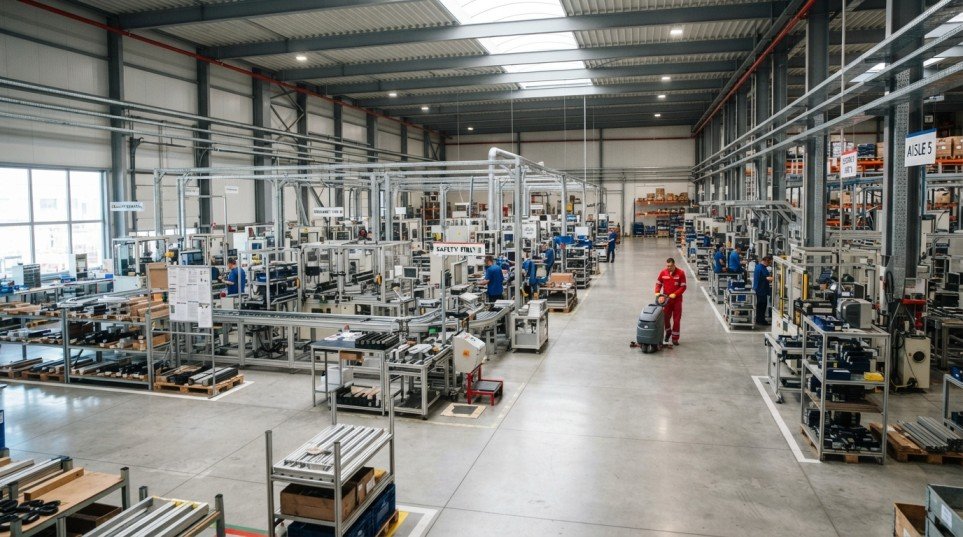
Factory cleaning refers to the professional cleaning of manufacturing and industrial facilities, covering far more ground than a typical office clean. Depending on the site and the agreed scope of work, factory cleaning can include:
- Production areas
- Factory floors
- Areas surrounding machinery
- Warehouse spaces
- Loading and dispatch areas
- Factory offices
- Staff rooms
- Washrooms
- Common areas
- Accessible outdoor areas
The exact scope always depends on the individual facility. A food production site, for example, will have different priorities to a warehouse-heavy logistics operation. That’s why factory cleaning is usually built around a customized cleaning plan rather than a generic checklist.
What’s Included in Factory Cleaning Services in Melbourne?
Most factory cleaning Melbourne businesses arrange will cover a combination of the areas below, adjusted to suit the facility’s size, industry, and daily operations.
Factory Floor Cleaning
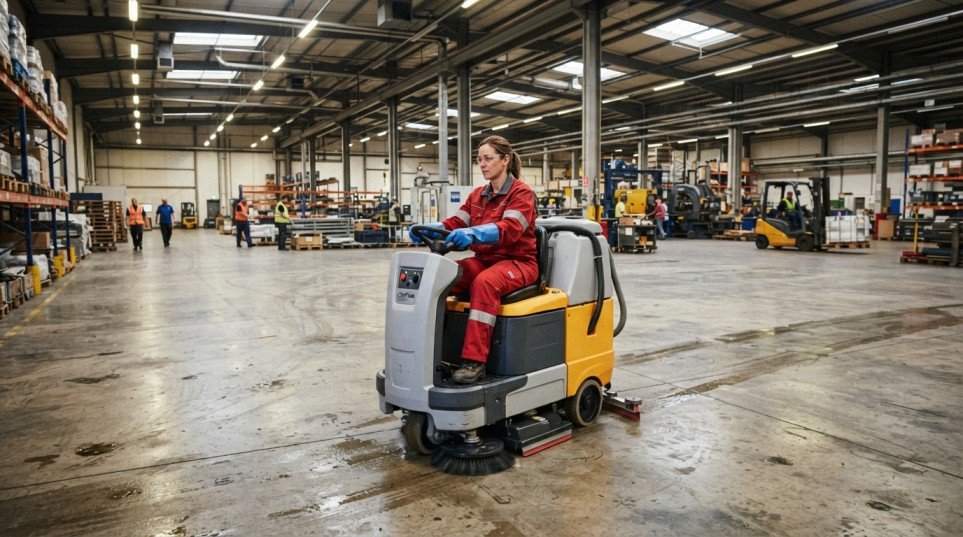
Factory floors take a real beating. Depending on the surface, whether it’s concrete, vinyl, or an epoxy/resin coating, cleaning may involve:
- Sweeping to remove loose debris
- Vacuuming dust and fine particles
- Mopping general floor areas
- Floor scrubbing for built-up dirt
- Dust removal from corners and edges
- Grease and residue removal where appropriate
- Stain treatment where the surface allows it
Regular floor cleaning does more than just improve appearance. It helps maintain a cleaner, more organized working environment and reduces the buildup of dirt, dust, and debris that naturally accumulates in a production setting.
Machinery Area Cleaning
Cleaning around machinery focuses on the surfaces and spaces surrounding equipment, not the machinery’s internal components. This typically includes removing:
- Dust
- Production residue
- General dirt
- Surface grease
- Other surface contaminants
It’s worth being clear here: professional factory cleaners should never open up machinery, attempt internal maintenance, or clean hazardous internal parts unless they’re specifically authorized and trained to do so. Cleaning around machinery always needs to follow site safety procedures and manufacturer requirements, working around accessible surfaces rather than the equipment itself.
Production Area Cleaning
Production areas are often the busiest part of a facility, so cleaning here usually covers:
- General work areas
- Accessible surfaces
- Production floors
- Surrounding spaces
- Commonly used walkways and stations
Because production areas are typically in active use, cleaning schedules often need to work around operational hours early mornings, evenings, or designated breaks in production so cleaning doesn’t interrupt the workflow.
Warehouse Cleaning
Warehouse cleaning Melbourne facilities need is a category of its own. It generally includes:
- Warehouse floors
- Storage areas
- Walkways and aisles
- Other accessible surfaces
- Dust and debris removal
- General housekeeping tasks
Warehouses present a particular scheduling challenge, since stock movement, forklifts, and staff activity all need to be factored in. A good cleaning plan works around these movements rather than against them. 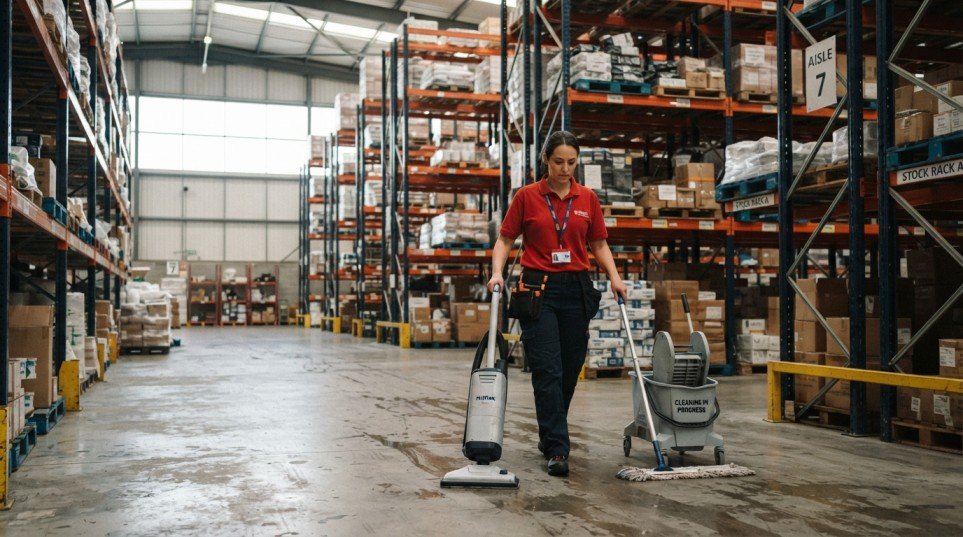
Loading Dock Cleaning
Loading docks see constant vehicle and material movement, which means they tend to accumulate:
- Dust
- Packaging material
- General dirt
- Debris from deliveries and dispatch
Regular housekeeping in this area helps keep loading zones functional and presentable, especially in facilities with frequent freight activity.
Factory Office Cleaning
Many factories also include office spaces reception areas, meeting rooms, administrative offices, and staff workstations. These areas are usually cleaned in a similar way to standard commercial office cleaning, covering:
- Dusting surfaces and fittings
- Vacuuming carpeted areas
- General surface cleaning
- Bin emptying
- High-touch surface cleaning (door handles, light switches, shared equipment)
Washroom and Staff Facility Cleaning
Shared staff facilities need consistent attention, including:
- Toilets and urinals
- Basins and taps
- Mirrors
- Floors
- Partitions
- Break rooms and other staff amenities
Keeping these spaces clean matters for everyday hygiene and comfort, particularly in facilities with larger workforces sharing the same amenities throughout the day.
Outdoor Factory Area Cleaning
Where accessible, outdoor cleaning can extend to:
- Entrances
- Pathways
- Loading zones
- External common areas
Clean external areas contribute to the overall presentation of a facility, often the first thing visitors, suppliers, or clients notice when arriving on site.
Factory Deep Cleaning vs Routine Cleaning
Not all factory cleaning looks the same, and it’s worth understanding the difference between routine cleaning and deep cleaning.
Routine cleaning generally covers the day-to-day upkeep of a facility, including:
- Floor cleaning
- Dust removal
- Common area maintenance
- Washroom cleaning
- Staff room upkeep
- Waste handling
- High-touch surface cleaning
Deep cleaning, on the other hand, goes further and typically addresses:
- Built-up dirt in less frequently cleaned areas
- Detailed floor cleaning
- Grease and residue buildup
- Hard-to-reach accessible areas
- Surfaces that aren’t part of routine cleaning
- Detailed warehouse or production-area cleaning
The right balance between routine and deep cleaning depends entirely on the facility’s size, industry, and how much wear and tear the space experiences.
How Often Should a Factory Be Cleaned?
There’s no single answer here, since factory cleaning frequency depends on a range of site-specific factors, including:
- Factory size
- Number of employees
- Level of production activity
- Operating hours
- Dust levels generated by the work
- Amount of waste produced
- Foot traffic throughout the day
- How heavily machinery is used
- Overall facility layout
- Type of industry
Depending on these factors, a facility might need:
- Daily cleaning
- Cleaning several times per week
- Weekly cleaning
- Periodic deep cleaning on top of routine visits
The right schedule should be built around the facility’s actual requirements rather than applying a generic timetable across every site.
Why Professional Factory Cleaning Matters
Bringing in professional factory cleaners offers a number of practical benefits for Melbourne businesses, including:
- Cleaner, better-maintained production areas
- Improved general housekeeping standards
- Reduced buildup of dirt and debris over time
- Cleaner factory floors and walkways
- More consistently maintained staff facilities
- Better overall presentation for visitors and clients
- A consistent, reliable cleaning schedule
- Less cleaning workload placed on internal staff
- Access to professional-grade equipment and cleaning methods
It’s important to be realistic about what cleaning can and can’t do. Professional cleaning doesn’t guarantee workplace safety or eliminate every workplace hazard it’s one part of a broader facility maintenance and safety strategy, working alongside proper equipment maintenance, staff training, and safety procedures.
Factory Cleaning and Workplace Safety
Good cleaning practices support general workplace housekeeping, which plays a role in a safer working environment. This includes managing:
- Spills
- Grease buildup
- Debris in walkways
- General clutter
- Wet floors
- Blocked walkways
- Cleaning that’s carried out safely around machinery
- Appropriate warning signage during and after cleaning
- Correct use of PPE by cleaning staff
- Safe handling of cleaning chemicals
Rai Cleaning isn’t a workplace safety regulator, and factory cleaning shouldn’t be treated as a substitute for a business’s own safety obligations. For authoritative guidance on workplace health and safety requirements, Victorian businesses can refer to WorkSafe Victoria, which sets out safety expectations for industrial and manufacturing workplaces.
Equipment Used for Factory Cleaning
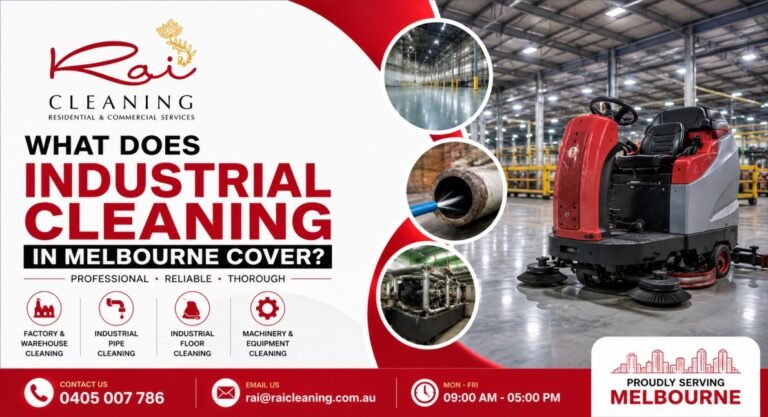
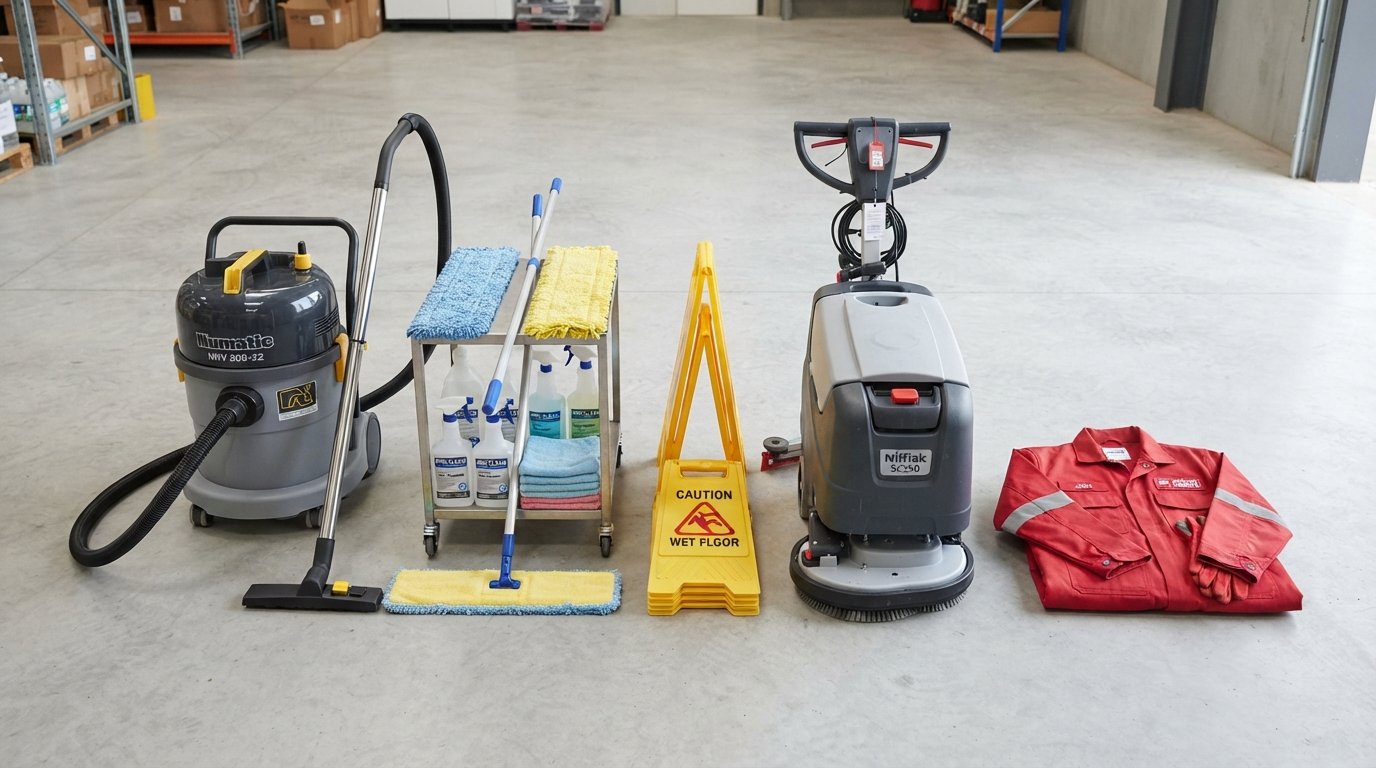
Factory cleaning relies on equipment suited to industrial environments, which is generally more heavy-duty than what’s used for office cleaning. Common equipment includes:
- Commercial vacuum cleaners
- Industrial floor scrubbers
- Mops and microfibre cleaning systems
- Pressure cleaning equipment where appropriate
- Floor cleaning equipment suited to concrete, vinyl, or resin surfaces
- Cleaning chemicals appropriate to the surface and task
- Safety signage
- Waste collection equipment
The right equipment for a job depends on the surface type, the specific facility, the cleaning task at hand, manufacturer instructions, and workplace safety requirements on site.
How to Choose Factory Cleaning Services in Melbourne
If you’re comparing options for industrial cleaning services Melbourne wide, it helps to look for a few key things:
- Experience working in commercial or industrial environments
- A clear, well-defined scope of work
- Flexible scheduling around your operating hours
- Suitable cleaning equipment for your facility type
- Trained cleaning staff
- Safe cleaning procedures
- Customized cleaning plans rather than generic packages
- The ability to work around production schedules
- Clear, responsive communication
- Transparent quoting
- Regular quality checks
- Appropriate business documentation and insurance
Taking the time to check these points upfront can save a lot of back-and-forth later on.
Questions to Ask a Factory Cleaning Company
Before signing on with a cleaning provider, it’s worth asking:
- What areas are included in the service?
- Can you work around our production hours?
- What cleaning equipment do you use?
- Do you offer deep factory cleaning as well as routine cleaning?
- Do you clean warehouse areas?
- Do you clean factory floors specifically?
- Can the cleaning schedule be customized to our needs?
- How often should our facility be cleaned?
- What areas are excluded from the service?
- How can I request a quote?
Clear answers to these questions make it much easier to compare providers and understand exactly what you’re getting.
Why Choose Rai Cleaning for Factory Cleaning in Melbourne?
Rai Cleaning provides professional factory cleaning services in Melbourne and across Victoria, covering key areas of a facility, including factory floors, machinery areas, production areas, factory offices, loading docks, warehouses, washrooms, and outdoor factory areas.
The process generally starts with a facility assessment, followed by a custom cleaning plan built around the site’s layout and operating requirements. From there, a transparent quote is provided before any detailed cleaning work begins so business owners and facility managers know exactly what’s included from the outset.
If your business needs a Melbourne factory cleaning service that can be shaped around your production schedule rather than the other way around, it’s worth having a conversation about your facility’s specific requirements. You can also learn more about Rai Cleaning’s full range of services on the Rai Cleaning homepage.
FAQs
1. What is included in factory cleaning services in Melbourne?
Factory cleaning typically covers factory floors, machinery-adjacent areas, production areas, warehouses, loading docks, offices, washrooms, and accessible outdoor areas. The exact scope depends on the facility and the agreed cleaning plan.
2. How often should a factory be professionally cleaned?
This depends on factors like facility size, production activity, foot traffic, and industry type. Some facilities need daily cleaning, while others may only require weekly visits plus periodic deep cleans.
3. What areas do factory cleaners usually clean?
Common areas include factory floors, production spaces, warehouse aisles, loading docks, factory offices, washrooms, and staff facilities, along with accessible outdoor areas.
4. Do factory cleaning services include warehouse cleaning?
Yes, warehouse cleaning is typically included as part of a broader factory cleaning service, covering floors, storage areas, walkways, and general housekeeping.
5. Can factory cleaning be scheduled outside production hours?
Yes. Cleaning schedules are usually planned around a facility’s operating hours to avoid disrupting production, deliveries, or staff activity.
6. What is the difference between routine and deep factory cleaning?
Routine cleaning covers everyday upkeep like floors, dust removal, and washrooms, while deep cleaning addresses built-up dirt, grease, and less frequently cleaned areas in more detail.
7. Why should businesses hire professional factory cleaners?
Professional factory cleaners bring the right equipment, experience, and consistent scheduling needed to maintain cleanliness across large, complex industrial spaces something that’s harder to manage with general cleaning staff alone.
8. How do I choose a factory cleaning company in Melbourne?
Look for experience with industrial environments, a clear scope of work, flexible scheduling, suitable equipment, and transparent quoting before committing to a provider.
9. How can I contact Rai Cleaning for factory cleaning?
You can reach Rai Cleaning on 0405 007 786 or by email at rai@raicleaning.com.au to discuss your facility’s factory cleaning requirements.
Get in Touch
Learn more about the full scope of work on the factory cleaning services page, or get in touch directly to discuss your requirements:
Phone: 0405 007 786
Email: rai@raicleaning.com.au