
What Does Restaurant Cleaning in Melbourne Include?
Running a restaurant, café or commercial kitchen in Melbourne means juggling a lot at once: food quality, staff, customer service and, quietly in the background, cleanliness. Diners rarely comment on a spotless floor or a fresh-smelling bathroom, but they notice immediately when something is off. For restaurant owners and managers, understanding what professional restaurant cleaning in Melbourne actually involves makes it much easier to plan a cleaning schedule, budget for it properly and keep the venue compliant with food safety rules. Rai Cleaning works with hospitality businesses across Melbourne, so this guide draws on what a typical professional clean covers.
This guide breaks down exactly what goes into professional restaurant cleaning, from the kitchen to the dining room, so you know what to expect and what to ask for.
Why Restaurant Cleaning Matters in Melbourne
Melbourne’s hospitality scene is busy and competitive. Customers have plenty of choices, and a single bad review about hygiene can do real damage to a restaurant’s reputation. On top of that, food premises across Victoria are expected to meet food safety and sanitation standards set by local councils and health authorities.
Beyond compliance, cleanliness affects the day-to-day running of a restaurant. Greasy floors are a slip hazard for staff. Poorly maintained kitchen equipment works less efficiently and wears out faster. A dirty dining area puts customers off before they’ve even looked at the menu. Regular, professional cleaning helps restaurants avoid all of this.
What Is Included in Professional Restaurant Cleaning?
Professional restaurant cleaning services generally cover every part of the venue, not just the areas customers see. A thorough clean typically includes:
- Commercial kitchen and food preparation areas
- Dining areas and customer-facing spaces
- Floors throughout the venue
- Tables, counters, and high-touch surfaces
- Bathrooms and toilets
- Waste and back-of-house areas
- Ventilation areas and extraction points
The exact scope depends on the size of the venue, how often it operates and whether the business needs a regular clean, a deep clean or both. A good commercial cleaning provider will usually walk through the site first to understand the layout and put together a cleaning plan that fits the business.
Commercial Kitchen Cleaning
The kitchen is the heart of any restaurant, and it is also the area with the strictest hygiene requirements. Commercial kitchen cleaning generally covers:
- Cooking equipment, including stovetops, ovens, grills and fryers
- Bench tops, sinks and food contact surfaces
- Splashbacks and walls near cooking stations
- Fridges, freezers, and cool room interiors
- Rangehoods, exhaust fans, and ventilation areas where grease can build up
Because commercial kitchens deal with grease, food residue, and constant heat, they need cleaning products and methods suited to those conditions. This is closely related to broader commercial cleaning work, but kitchens need a more food-safety-focused approach given how much surfaces are handled. Sanitation of food contact surfaces is especially important, since this is where cross-contamination risks are highest.
Sinks and Surfaces
Sinks, prep benches, and cutting surfaces should be cleaned and sanitized regularly throughout service, not just at the end of the day. Professional cleaners typically address these as part of a scheduled deep clean, working around the kitchen’s operating hours.
Food Preparation and Service Areas
Food preparation areas need a slightly different approach to general kitchen cleaning, since these surfaces come into direct contact with ingredients. This includes prep benches, chopping boards, utensil storage and any equipment used to plate or serve food.
Service areas, such as pass benches and servery counters, also need regular attention. These spots see constant use during a shift and can quickly accumulate spills, crumbs and grease if they are not wiped down and sanitised throughout the day.
Dining Area and Customer-Facing Spaces
The dining area is what customers actually experience, so it deserves just as much attention as the kitchen. This part of restaurant cleaning usually covers:
- Vacuuming or mopping dining room floors
- Wiping down tables, chairs and booths
- Cleaning glass, mirrors, and windows
- Dusting light fixtures, skirting boards and shelving
- Cleaning menus, condiment holders and any shared items
A clean, well-presented dining area sets the tone for the whole visit and reflects directly on the restaurant’s brand.
Floor Cleaning and Sanitisation
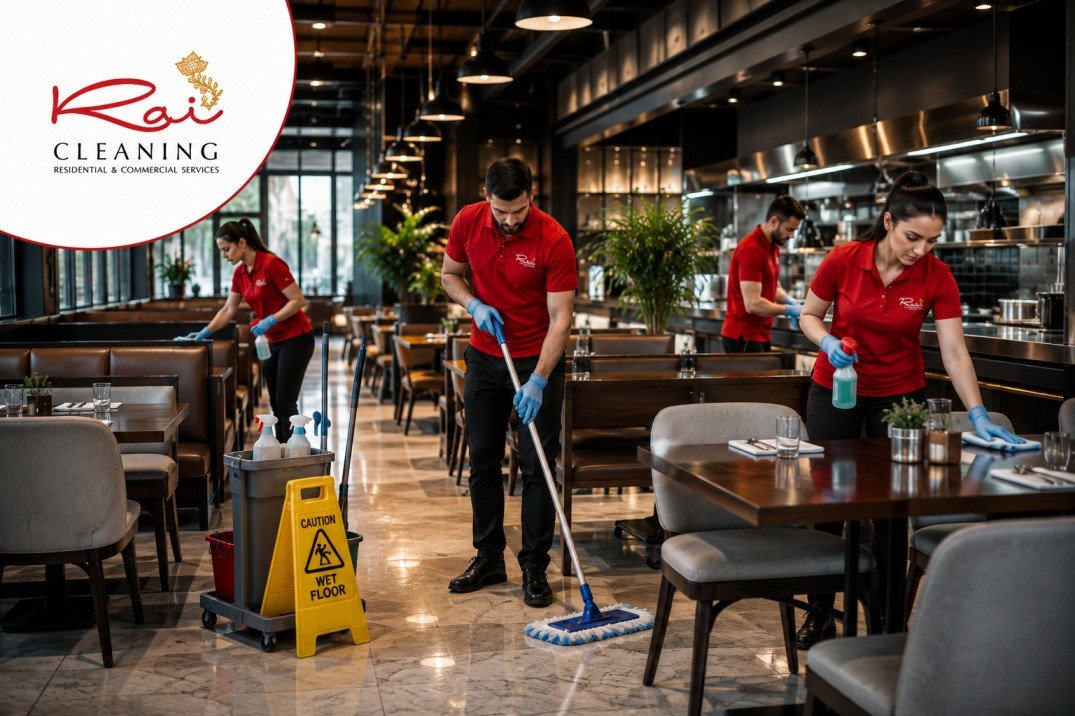
Floors take a heavy amount of traffic in a restaurant, from staff moving quickly between the kitchen and dining room to customers coming and going all day. Floor cleaning generally includes sweeping, mopping and sanitising, with kitchen floors often needing degreasing treatments to deal with oil and food residue.
In wet areas near dishwashing stations or walk-in fridges, non-slip flooring should be cleaned in a way that does not leave it more slippery. This is a genuine safety issue for staff working long shifts.
Tables, Counters and High-Touch Surfaces
High-touch areas spread germs faster than almost anywhere else in a restaurant. Door handles, light switches, EFTPOS terminals, menus and condiment bottles are all touched repeatedly throughout the day by both staff and customers.
A thorough restaurant clean pays particular attention to these areas, wiping and sanitising them more frequently than surfaces that see less contact. Many restaurants ask their cleaning provider to prioritize high-touch surfaces during peak periods, particularly during cold and flu season. This is a similar focus to what’s applied in office cleaning for shared workspaces, where high-touch points also carry the greatest hygiene risk.
Restaurant Bathrooms and Toilets
Customer bathrooms are one of the first things people judge a restaurant on. A dirty or poorly stocked bathroom can undo the impression created by good food and service.
Professional restaurant bathroom cleaning typically includes cleaning and sanitising toilets, basins and fixtures, mopping floors, wiping mirrors, restocking soap and paper products, and emptying bins. Staff bathrooms and amenities areas are usually included in the same visit, since hygiene standards apply there too.
Grease, Grime and Hard-to-Clean Areas
Every kitchen has spots that build up grime faster than daily wiping can manage. This includes rangehood filters, the areas behind and under cooking equipment, tile grout, drains and extraction ductwork.
These areas are usually addressed as part of a deep clean rather than a routine visit, since they often need specialised equipment or degreasing agents to break down built-up grease. Left unattended, grease build-up in ventilation areas can become a fire risk, which is one reason many restaurants schedule this work on a set cycle rather than waiting until it becomes visible.
Waste and Back-of-House Areas
Bin areas, loading docks and storage rooms are easy to overlook, but they matter for hygiene and pest control. Waste areas need regular cleaning and sanitising to prevent odours and discourage pests, while back-of-house storage areas benefit from regular dusting and organisation so stock stays in good condition.
Staff areas, including break rooms and lockers, are also worth including in a cleaning schedule. A tidy space for staff to take a break contributes to a healthier working environment overall. Restaurants that share a strip or centre with shopfronts often coordinate this kind of scheduling with neighbouring retail cleaning services, particularly around shared waste and loading areas.
Deep Restaurant Cleaning vs Routine Cleaning
Restaurants generally need two different types of cleaning working together.
Routine cleaning happens daily or several times a week and covers the basics: floors, surfaces, bathrooms and general tidiness. This keeps the venue presentable and hygienic between deeper cleans.
Deep cleaning is more intensive and less frequent, usually monthly or quarterly depending on the restaurant’s volume. It covers the harder-to-reach areas: behind equipment, inside extraction systems, grout lines, and any grease or grime that routine cleaning cannot fully remove.
Both types of cleaning play a role. Skipping deep cleans in favour of routine cleaning alone tends to let grease and grime build up over time, which is harder and more costly to remove later.
How Often Should a Melbourne Restaurant Be Professionally Cleaned?
There is no single answer, since it depends on how busy the venue is and what type of food is served. As a general guide:
- High-volume kitchens with heavy grease use, such as those with fryers and grills, often benefit from weekly professional attention alongside daily in-house cleaning
- Cafés and smaller kitchens may only need fortnightly or monthly professional cleaning on top of daily staff cleaning
- Deep cleans of ventilation, extraction and hard-to-reach areas are commonly scheduled every one to three months
A commercial cleaning provider can help assess the right frequency based on the kitchen’s setup and how it is used.
Benefits of Hiring Professional Restaurant Cleaners
Handling all of this in-house is possible, but many restaurants find it more practical to bring in professional cleaners. Some of the benefits include:
- Freeing up kitchen and front-of-house staff to focus on food and customer service
- Access to commercial-grade equipment and cleaning methods suited to hospitality environments
- A consistent cleaning schedule that does not get skipped during busy periods
- Reduced risk of grease build-up, pest issues, and slip hazards
- A cleaner presentation for customers, which supports the restaurant’s reputation
What to Look for When Choosing Restaurant Cleaning Services in Melbourne
Not all commercial cleaning services are set up to handle hospitality environments. When comparing providers, it helps to consider:
- Experience with commercial kitchens and food premises
- Availability outside trading hours, since most restaurants need cleaning done before opening or after closing
- Flexibility to scale between routine cleaning and deep cleaning as needed
- Clear communication about what is included in each visit
- A team that understands food safety expectations around cleaning schedules and surfaces
Asking a provider to walk through their process before booking is a reasonable way to check they understand hospitality cleaning specifically, rather than applying a generic commercial cleaning approach.
Why Choose Rai Cleaning?
Rai Cleaning provides commercial cleaning services across Melbourne, including restaurant and café cleaning for hospitality businesses that need a reliable, flexible cleaning partner. The team also supports broader commercial cleaning needs for businesses that operate alongside food premises, such as retail spaces or shared building areas. You can read more about the team on the About Us page.
Restaurants and cafés can work with Rai Cleaning to set up a schedule that fits around trading hours, whether that means early morning, late night or between-service cleaning. For venues that need urgent attention outside a regular schedule, emergency cleaning services are also available.
If your restaurant or café is looking for a Melbourne-based cleaning provider that understands hospitality environments, get in touch with Rai Cleaning to discuss your cleaning requirements.
Final Takeaway
Restaurant cleaning covers a lot more than a quick wipe-down at closing time. From commercial kitchen equipment and food preparation surfaces to dining areas, bathrooms, and waste zones, every part of a restaurant plays a role in hygiene, food safety, and customer impressions. Combining routine cleaning with scheduled deep cleans is the most reliable way to keep a Melbourne restaurant running smoothly and meeting the standards customers expect.
Ready to set up a cleaning schedule for your restaurant or café?
Contact Rai Cleaning on 0405 007 786.
WhatsApp at https://wa.me/610405007786,
Email rai@raicleaning.com.au to discuss your requirements.
Frequently Asked Questions
What does restaurant cleaning include?
Restaurant cleaning covers the commercial kitchen, food preparation areas, dining spaces, floors, tables and high-touch surfaces, bathrooms, waste areas and ventilation points. It combines routine cleaning with periodic deep cleaning of harder-to-reach areas.
How often should a restaurant be professionally cleaned?
This depends on the venue’s size and volume. Busy kitchens often benefit from weekly professional cleaning alongside daily staff cleaning, while smaller cafés may only need fortnightly or monthly visits, with deep cleans scheduled every one to three months.
What is included in commercial kitchen cleaning?
Commercial kitchen cleaning typically covers cooking equipment, bench tops, sinks, splashbacks, fridges and freezers, and ventilation areas such as rangehoods and exhaust fans where grease tends to build up.
How much does restaurant cleaning cost in Melbourne?
Cost depends on the size of the venue, how often cleaning is needed, and whether the service is routine or a deep clean. Rai Cleaning provides free, no-obligation quotes based on the specific requirements of each restaurant.
Is restaurant deep cleaning different from regular cleaning?
Yes. Regular cleaning covers day-to-day hygiene, such as floors, surfaces, and bathrooms. Deep cleaning is more intensive and less frequent, targeting areas like extraction systems, behind equipment, and built-up grease that routine cleaning cannot fully address.
Why should restaurants hire professional cleaners?
Professional cleaners bring commercial-grade equipment and experience with hospitality environments, allowing kitchen and front-of-house staff to focus on food and service while keeping the venue consistently clean and compliant.
Can professional cleaners clean dining areas and bathrooms?
Yes. Restaurant cleaning services typically cover the full venue, including dining areas, customer and staff bathrooms, not just the kitchen.